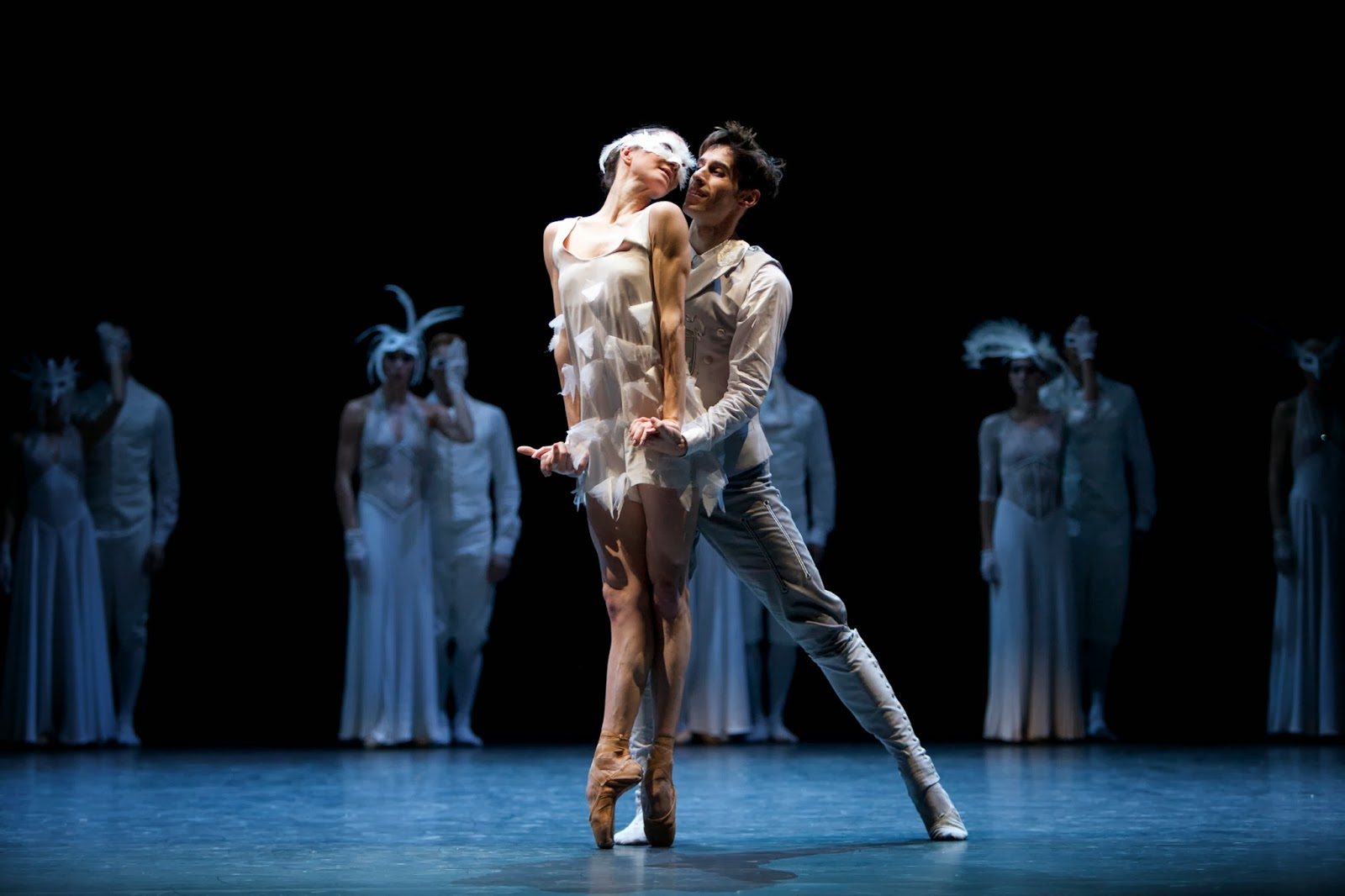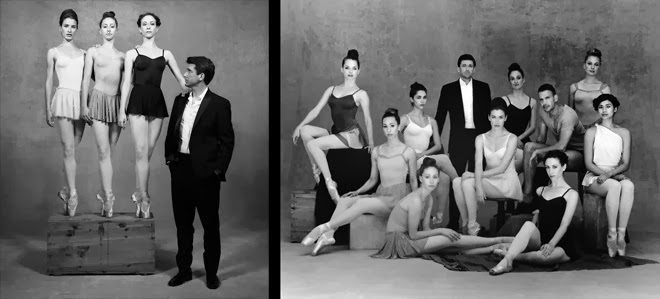
…could be the subtitle of Casebolt and Smith’s dance/theater piece, O(h), now playing weekends through February 19 at the Actors Company Theatre in West Hollywood, a cool space to see dance. We were the first to write about Liz Casebolt and Joel Smith for the Los Angeles Times in 2008 (as part of a larger article), so click here to read that. Flash forward to: Their latest show, one intended to broaden the audience for contemporary dance, features the pair having no compunctions about tackling sacred cows, including Martha Graham (click here to read our LAT review of the Graham troupe’s visit last year, the 85th anniversary of the company).
And dance aficionados will surely enjoy references to the likes of Charles Weidman (right, from 1939, The Dance of Life; photo by Barbara Morgan), and Jiří Kylián. (Click here for our reportage on Netherlands Dance Theater, the Hague-based troupe that performed at the Pavilion last March. We also did a KUSC interview with Jim Vincent, who, alas, is no longer directing the company – and have covered many a Holland Dance Festival in Den Hague, so click here for our Dance Magazine coverage from 2009.)
But we digress: We recently reviewed Casebolt and Smith for Dance Magazine, so not wishing to be redundant, click here to read our take for yourselves. Also, in the spirit of supporting Los Angeles dance, we urge you to puhleeze get thee to the West Hollywood venue and see for yourselves this unique act, albeit one in search of a director. Enjoy and please let us know what you think. Merci, gracias, thanks and danke. (And for those seeking to further enhance the dance-going experience, check out Wim Wenders‘ new 3D documentary, Pina, Germany’s entry for best Oscar documentary, and click here for our coverage. After all, one can never have too much dance!)
It was a huge loss to the global arts community when choreographer Pina Bausch died unexpectedly from cancer in 2009, at age 68, some five days after being diagnosed (and not even two weeks after Michal Jackson’s equally untimely death).
We were in Montpellier at the time (click here for our Los Angeles Times Dispatch From Montpellier; click here and here for our 2011 festival coverage, including our LAT reportage), and were naturally distraught. (Merce Cunningham would die in 2009 as well, shortly after the German-born choreographer, but at age 90.)
Pina, as she was affectionately known, had trained with Kurt Jooss, one of the fathers of German expressionistic dance, and graduated from Juilliard before founding the contemporary troupe, Danztheater Wuppertal Pina Bausch, in that industrial town in 1972. Famous for its striking theatricality, which included sado-masochism, intentionally bad ballet, lots of evening gowns, high heels, lipstick-adorned women and barefoot men in suits, Pina’s company was also known for its stellar dancers.
Direct, coy and infused with manic glee, many performers stayed with Pina for more than 25 years. Now, with Wim Wenders’ gorgeous documentary, Pina, Germany’s official entry at the 84th Oscars (it better win!), we have a peek into Pina’s world. Having become completely smitten with Bausch after seeing a 1985 performance by the company (her choreography had already garnered world-wide acclaim and would continue to win major prizes until her death), Wenders sought out the dancemaker.
The two immediately began making plans to collaborate, and were in talks for 20 years, until Wenders (below), after seeing the concert film U2 3D, finally found the format that would bring Bausch’s work to the screen in all its kinetic splendor. The year was 2009, but just two days before the first rehearsals were to begin, Bausch died. The work that was to be a documentary about Pina, then became a love letter for Pina. (And though Pina isn’t the first 3D dance film – last year Michael Flatley’s Lord of the Dance 3D underwhelmed the critics – click here for our L.A. Times review – it certainly has raised the bar.)
Wenders’ film is filled with stunning imagery. Excerpts are included from Bausch’s famed Rite of Spring (where dancers move, angst-ridden, through several tons of dirt that cover the stage, right and at top), and Nelken or Carnations, whose set is a stage strewn with thousands of the pink herbaceous perennial. (Click here for our review from the 2010 Lyon Danse Biennale, where we actually got to hang out with some of the company’s dancers. We also cherish our time spent with Pina, herself, in a 1996 interview.) But we digress: Bausch’s early masterpiece, 1978′s Café Müller, below, is also seen, both in past and present iterations.
An intimate work based on Bausch’s childhood memories of her parents’ establishment, Müller features a female dancer (originally Bausch), re-entering the café as a sleepwalker, eyes shut tight and arms outstretched. Set to the music of Henry Purcell, the work is filled with chairs being flung about in a place where people don’t connect easily (what would Facebook’s Mark Zuckerberg think?), their spasmodic, often brutal moves a social metaphor. Occasionally decried as ugly – and not dance, per se – the work was excerpted in Pedro Almodóvar’s 2002 film, Talk to Her, with Pina, one of the dancers, doing the terpsichorean honors.
Wenders, known for such films as Paris, Texas, Wings of Desire and Buena Vista Social Club, made wonderful use of Wuppertal and its environs, shooting scenes in and around its famous monorail, in traffic and on piles of waste that surround the city. There are also excerpts from Kontakthof (Meeting Hall), performed in three different versions: the Bausch ensemble; older dancers raging from 65 to 80; and teens, aged 14 to 18. (For a look at Pina working with teens on her work Contact, we recommend Dancing Dreams, a fine documentary directed by Anne Linsel and Rainer Hoffman; click here for our take on that.)
Bausch was also known for huge sets, one featuring water, Vollmond (Full Moon), which takes place in an onstage river of water – tons of it (right), while her 2004 work, Ten Chi, with Peter Pabst’s trisected whale dominating the stage, was a memorable opus we reviewed for Dance Magazine in 2007 at UCLA’s Royce Hall (click here). And though we were jet-lagged, having just come from Den Hague and the Holland Dance Festival (click here for our coverage of that), we were mesmerized by the three-hour opus, not least of which was due to the insanely fierce dedication of the dancers.
Speaking of dancers, members of Pina’s troupe are also interviewed in the film, lauding her in adoring terms. One recalls: “When I began, I was pretty shy; I still am. And after many months of rehearsing, she called me and said, ‘You just have to get crazier.’ And that was the only comment in almost 20 years.”
It was Bausch herself who had insisted the film not have a conventional narration, which might make it seem excessively foreign to those who aren’t dance aficionados. But this is decidedly not the case: As dance is a form of non-verbal communication – stories without words – it’s fitting that this tribute to Pina, who impacted contemporary dance in profound ways, does most of its talking through bodies, those very bodies she explored, excavated and arranged so exquisitely, even as they were nude, vulnerable and subject to torment, psychological and otherwise.
Finally, much as we absolutely loved the film, we also came away slightly haunted – and sad – at the thought that Pina left us too soon. True, her work remains – or does it? We wonder, after all, how the company will continue without this unique voice at its helm – and with its dancers, for the most part, not getting any younger. Knowing there will never be another Pina Bausch hurts, but we’re grateful for the time we had with her – and for this remarkable film by Wim Wenders.
We love Michelle Williams, but she can’t hold a candle to Marilyn Monroe in the waifish, sex bomb, whispered-voice arena. Indeed, it’s almost painful to watch Williams, all padded hips, corseted waist and neo-torpedoed breasts, trying to emulate the tragic blonde icon in Simon Curtis’ trifle of a film, My Week With Marilyn.
Largely based on an equally slight 2000 book by British documentary filmmaker, Colin Clark, whose most notable claim to fame was working with Monroe and crew on the 1956 Sir Laurence Olivier-directed film, The Prince and the Showgirl, this flick is yet another look at the bi-polar goddess of cinema, albeit an unfortunate look.
And as Julian Barnes writes in his wispy Booker Prize winning tome, The Sense of an Ending (click here for our coverage), “memory equals events plus time,” Clark’s story may also have mutated since his stint with Sir Larry, etal, lo those many decades ago. Clark, a son of privilege (his father was the eminent art historian Kenneth Clark), is played toothily by the otherwise formidable Eddie Redmayne, and got the gig because his parents were friends with the director and his wife, Vivien Leigh, abysmally portrayed here by Julia Ormond, who seems to be one of those actors who keeps failing upwards.
In any case, how could so much go so wrong, besides the major miscasting of Williams? We’ll get to that, but first, there were actually several decent moments: Curtis, who is married to Elizabeth McGovern (Lady Grantham on PBS’s delicious Downton Abbey; click here for our take on that fabulous series), has a good Olivier in Kenneth Branagh (and if he were taller it would really work), whose disdain for the perpetually late-to-the-set sexpot erupts with more frequency than Mt. Etna.
(We gotta say, though, that we love Sir Larry, and his directorial temper shenanigans don’t surprise, cuz they come with the genius territory. To wit: his Heathcliff in Wuthering Heights; any of his Shakespeare roles; and we could go on…).
Another great English actor in this flick: Dame Judi Dench shines in the small role of Sybil Thorndike, who gently coaxes poor Marilyn through a number of not very difficult line-readings.
But as scripted by Adrian Hodges, the film is a roller coaster of clichés that we’ve heard and seen before: Although Monroe had only recently married her third husband, playwright Arthur Miller (Dougray Scott), he ups and leaves London in a fit of disgust. (Cue pill-taking and Clark’s shoulder for Marilyn to cry on, boo hoo.) Zoë Wanamaker, on the other hand, manages a darkly comic turn as Monroe’s acting coach, Paula Strasberg, who continually promises Olivier that the great actress that is Marilyn Monroe will save the day. Nothing really does save the day – or The Week, for that matter.
And it’s even worse when Williams is asked to recreate a host of overly familiar Monroe poses: nude, windswept, half-drunk. The nadir, though, is when Williams tries to sing à la Monroe, but in her own voice. Add to that Williams’ complexion (not naturally creamy), bone structure (her schnoz seems a bit off-kilter), and weirdly styled hair that often resembles a tightly-coiled wig in bedhead mode, and there is a veritable drag-show quality to this portrayal. Where is Lypsinka when you need her! More importantly, what would Heath Ledger have thought? (We love Heath and still miss him dearly…)
Seriously, Oscars, puhleeze don’t even think about giving Michelle Williams a nod for this. Better yet, why wasn’t the film left to the dust bin of memoirs, or at least cast with someone like, well, Carey Mulligan. This just in: Okay, peeps, Michelle Williams won the Golden Globe for Best Performance By an Actress in a Motion Picture – Comedy or Musical. Yeah, we thought your performance as Marilyn Monroe was absolutely hilarious. The movie was a hoot. Right up there with Charlie Chaplin, Buster Keaton, Jerry Lewis and Woody Allen. We’re still laughing, can’t you tell. Harumph to the HFPA!
The real life Prince and his Showgirl: Sir Laurence Olivier and Marilyn Monroe
Okay, so we arrived a tad late to the party, the feast that is Downton Abbey, the series that won six Emmys last year and will probably clean up at the Globes this weekend. But we’re in full-throttle mode now. Devouring most of Season 1 over Christmas weekend and catching the final episode after we came back from San Francisco in early January, we’re now spreading the gospel. (We recently hooked Mr. Looseleaf on the series, which is tres cool, cuz we can now iChat about all of the brouhaha erupting at the fictional estate of Downton Abbey.)
For those not in the loop, DA is a public television series chronicling the aristocratic Crawleys, set during the late Edwardian era, beginning with the news of the Titanic’s sinking. Originally created and written as a mini-series (four eps of 90 minutes each), by the fabulous Julian Fellowes (left, he won a Best Screenplay Oscar for the late Robert Altman-directed 2001 film, Gosford Park), DA is a guilty pleasure…and then some.
Featuring a stellar ensemble cast (hello, Maggie Smith, dowager divine, who delivers her zingers with such style we can’t help but laugh out loud), deliriously gorgeous costumes and scenery, and clever plot lines, DA is a frothy, intriguing foray into a fantasy kind of life, i.e., Twitterless, that now seems eons ago.
In a nutshell: The series revolves around Lord and Lady Grantham (Hugh Bonneville and Elizabeth McGovern as Cora, his American-born heiress wife, respectively); the Lord’s redoubtable mother, the Dowager Countess (Smith); and three eligible daughters, none of whom, however, are able to inherit the estate due to an antiquated British law known as an ‘entail.’ Enter then third cousin Matthew Crawley (Dan Stevens), a middle-class barrister, and his mother Isobel (Penelope Wilton), ready to ascend to the manor, er, unborn.
The high jinx of this high-bred family are paralleled by a hierarchy of servants with their own machinations, including affairs, ambitions and what-have-yous. And while the Crawleys, in that veddy, veddy British fashion, keep their feelings from one another, they have no compunctions about unburdening themselves to their trusted maids and valets. (Who needs a therapist, hah!)
The class system is, of course, on unbridled view, with the help, generally loyal to the family to a fault, remaining unshakeable with regards to any standard-loosening. The view is also one of hard-core Romanticism, especially that evoked by the Crawleys’ first-born, Lady Mary (Michelle Dockery), a morass of feelings, rebelliousness and darkness, her delicate beauty scorching the small screen, even when she rides with the hounds (left).
So: Will she or will she not marry cousin Matthew, solving the inheritance issue? Or will she have – gasp – a one-night stand with the handsome Turk, Kemal Pamuk (Theo James, right, with mud on his face, which should be the worst that fate doles out to him), an event that will come back to haunt the family in Season 2. (That season, which began last Sunday, opens in 1916, with the two-hour episode drenched in the blood and horrors of World War I.)
And what would romantic intrigue be without any homosexual under(over) tones. Cue evil footman Thomas (Rob James-Collier), while the downstairs love factor also becomes heated: Lord G’s valet, the lame Bates (Brendan Coyle), and Lady’s maid Anna (Joanne Froggatt, below), exchange words of love and darting looks, although the deed remains unconsummated, with Season 2 bringing melodramatic surprises for this pair.
Who knew, as well, that middle daughter, spinster Lady Edith (Laura Carmichael), could be as conniving as Iago, while the youngest, Lady Sybil (Jessica Brown-Findlay, below left), a feminist, is the first to embrace a changing England (and her chauffeur), because others seem to be in denial or, worse yet, not even notice the future hurtling towards them.
Ultimately, though, we must ask ourselves why we care about British aristocracy. For one reason, we at The Report are mad about Englishmen, lordly or not (click here for our Ricky Gervais coverage; here for Ben Whishaw; here for Keith Richards; here for Julian Barnes; and coming soon, Gary Oldman and Colin Firth). For another, the American idea of aristocracy, say, the Kennedys, has seemed to morph into an obsession with, ugh, celebrities, and face it: Beyoncé, J. Lo, etal, cannot hold a candle to the DA characters whose aura of magical mystery, both haute and low, will forever have a hold on us, no matter how far removed from finely polished flatware we find ourselves.
Finally, Downton Abbey, a dream of a series, makes for great water cooler conversation (not that we go into an office, our water cooler being a Brita filter), and since Boardwalk Empire and Homeland have both finished their respective seasons (click here for our coverage of BE and here for the Claire Danes/Damian Lewis show), and it’s been years since The Sopranos was on HBO, Sunday nights are once again providing our favorite escape. Something akin to Godiva chocolates, truffles and foie gras – though the California ban against the forced-fed goose liver delicacy will soon take effect – Downton Abbey, class with sass, has thrust us once again into a golden age of television.
THIS JUST IN: Riding the Downton Abbey bullet train, the beloved actor/hoofer/New Age goddess, Ms. Shirley MacLaine, will be joining the lords and ladies of the realm next season. (Click here for info on Shirley being honored with the AFI Lifetime Achievement award this June.) DA has cast the Oscar-winning thespian to play Martha Levinson, the American mother of Lady Grantham. And even our favorite news dude, Brian Williams, was excited about this casting coup, which should make for plenty of fireworks between MacLaine and the Dowager Countess. The third season begins shooting next month and is expected to have its premiere in Britain in September, meaning we Yankees won’t get it until January 2013. Our only question: Will Shirley be asked to cut a rug, or at least strut her still spunky stuff in some cool fashion? We hope so, as evidenced in this clip, choreographed by the inimitable Alan Johnson. (Thanks Dance Magazine EIC, Wendy Perron, for finding the clip!)
Welcome to 2012 and please forgive us for not having posted earlier in the new year, but we were felled by some mysterious stomach bug after a magnificent trip to San Francisco. That said, the short plane flights were perfect to catch up on our reading, specifically the latest from Julian Barnes. The Brit, who won the 2011 Man Booker Prize for The Sense of an Ending, a slim-as-prosciutto novella (it was his fourth nomination, his 11th novel), is a beautiful writer. But much as we liked this tiny tome of memory and missed opportunity from Alfred A. Knopf, we felt a bit like the protagonist, Tony, who, according to an erstwhile lover of his, “Never got it.”
Be that as it may, there is much to admire about the book, as well as much to ponder: Told from Tony’s point of view, a middle-aged man who’s had an amicable divorce, a daughter and very little stress throughout his life, our protagonist must finally deal with a past he’s virtually never considered.
So: If you’re looking for action, this book’s not for you, with Ending instead plumbing psychological and emotional depths, though Tony, breezing through four decades rather effortlessly, has been far from introspective. Indeed, to him, “memory equals events plus time.” And hey – if these bon mots sound vaguely reminiscent of a scene from Woody Allen’s brilliant Crimes and Misdemeanors, (with Alan Alda, below) – that “comedy istragedy plus time” – we’re not gonna quibble.
Seriously, what could be more subjective than memory, with the Rashomon principle generally the prevailing one, especially in an individual’s warped and ever-mutating brain.
(Oh: Speaking of the Booker and slim volumes, Philip Roth snagged the prize in 2010 for his equally slight manuscript, Nemesis, much to the dismay of feminist judge Carmen Callil. That whack job of a decider claimed that Roth, whose books don’t stint on sex – had any recently, Callil – didn’t deserve to be shortlisted, much less win the prestigious award. Oy! We worship at the altar of Roth, so click here for our coverage on America’s greatest living writer.)
But we digress: Coming of age in the 60’s, Tony was part of a male quartet whose golden boy, Adrian, seemed to have all the answers, or at least the pithiest classroom rejoinders. Herewith Adrian’s approach to the past: “History is that certainty produced at the point where the imperfections of memory meet the inadequacies of documentation.” Hmm. Adrian’s brilliance, of course – or his obliqueness – makes his suicide as a young man all the more puzzling. (And we’re still musing over Adrian’s musings, go figure!)
But it wasn’t the first suicide to take place in this British tale, and, all those years later, when Tony is bequeathed money by the late mother of Adrian’s girlfriend, Veronica (she had canoodled with Adrian after Tony was finished with her), Barnes’ prose then takes on an investigative quality. The book, wrote New York Times’ critic Michiko Kakutani, “manages to create genuine suspense as a sort of psychological detective story. We not only want to find out how Mr. Barnes’s narrator, Tony Webster, has rewritten his own history — and discover what actually happened some 40 years ago — but also understand why he has needed to do so.”
Circling back on itself, Ending practically demands a second reading, which is something we plan on doing after we’ve finished plowing through Steven Naifeh’s and Gregory White Smith’s fantastic new biography, Vincent Van Gogh: The Life, also from Knopf. And why not go back for more, seeing as we love all things Brits, save for the food, perhaps. (Click here then for our take on Ben Whishaw; here for Ricky Gervais; here for Keith Richards; and the list goes on, including our obsession with and addiction to…Downton Abbey, which we’ll be covering anon.
Reading Ending again will also slake our thirst for acquiring more insight into the human condition, something this book renders in a peculiarly exquisite fashion. So, bravo to Barnes on his Booker win (which comes with the tidy sum of circa $78,000.), and we promise we’ll let you know when we become less clueless and do finally, er, get it.
Before we get out of Dodge to ring in the New Year, we simply must say a few words about The Artist, though forgive us for coming somewhat late to the game. (And no, we cannot pronounce the name of the director, Michel Hazanavicius, below, who also wrote the endearing script, but we plan on learning how soon.) With six Golden Globe nominations to its credit, The Artist should fare well at the January 15 ceremony, especially as hosted by our fave bad boy of yucks, Ricky Gervais (click here for our coverage on that).
And speaking of awards, we are willing to stake our good name on this: The Artist, a magical valentine to the movies, mainly the silent screen era and the fickleness of fame, will win the Oscar for best picture. Why? Because it is glorious, inventive, heart-tugging, delicious and basically flawless. Oh, yes: and the Academy voters are mostly old-school. We also can’t think of another picture we adored as much. (Yes, we loved Terrence Malick’s Tree of Life – click here to read about that – but the critics have been divided. David Cronenberg’s A Dangerous Method – click here for that – is on our Top Ten list for this year, but the flick never really caught fire. We do hear that Scorcese’s Hugo is terrific – and will report on that anon – but for us, The Artist is pure bliss. Finally, it has the Weinstein Brothers behind it.)
As for brothers, it’s no surprise that Hazanavicius is French, following in the footsteps of those film pioneers, the Lumière Brothers, Auguste and Louis. (It was the frères who held their first private screening of projected motion pictures in 1895, in Lyon – click here for our coverage of that fabulous city, including our take on the Lyon Danse Biennale, one of the great festivals of the world). So why is this French film that, for all intensive purposes, is silent and shot in sumptuous black and white (cinematography by Guillaume Schiffman), all the rage?
For one thing, the actors, Jean Dujardin as quintessential movie star George Valentin, and Bérénice Bejo (the director’s partner, btw, below), playing aspiring thespian Peppy Miller, are absolutely splendid, their compelling faces indelibly lighting up the screen. His pomaded hair and pencil-thin mustache; her doe eyes and open smile (her legs aren’t too shabby either), all add up to one big spectacular shebang.
We also care about these people: He, who won’t recognize the coming of talkies, remains mute and eventually falls on hard times; she, all young, modern and exuberant, ascends to celluloid heaven in the Star-Is-Born vein.
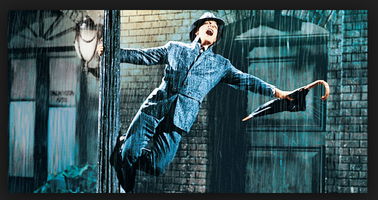
Then there’s the notion that Hazanavicius is paying canny tribute to other classic films, including Citizen Kane, with Singin’ In the Rain also evoked, and some funky dancing integral to this story.
In truth, the film is not entirely silent. Indeed, there is an ebullient score by Ludovic Bource, replete with a perfectly placed quote from Vertigo (Bernard Herrmann’s memorable score from the Alfred Hitchcock masterpiece, with James Stewart and Kim Novak, right). There are also witty moments when several key sounds are heard, all adding to the originality of this work.
Of course, we must mention Uggie, a thoroughly winning Jack Russell terrier (the precocious, albeit hyper breed, is also seen to great effect in Mike Mills’ The Beginners, another very good film with Ewan McGregor and Christopher Plummer, the latter a seeming lock for Best Supporting actor). And speaking of supporting players, The Artist features fine performances by James Cromwell as a chauffeur, Penelope Ann Miller as Valentin’s downer of a wife and a pitch-perfect John Goodman in the role of blowhard studio head.
Much as Woody Allen’s Midnight in Paris is a delightful feel-good affair that we are also passionate about (and which will, no doubt, get well-deserved Oscar nods), The Artist makes something new from something old, breathing fresh life into our cynical high-tech digitized existences, all the while giving nostalgia a new twist and restoring our faith in films. The true artist here is Michel Hazanavicius: We salute you, monsieur.
It’s that time of year when we reflect: on life, love, loss, latkes and leftovers. As for us at The Report, we’ve been pondering Christopher Walken recently and would like to take a few moments to pay homage to one of our favorite actors, a thespian who also happens to be a superb song-and-dance man à la James Cagney. We should have scribbled something earlier this year after we’d seen Kill The Irishman, Jonathan Hensleigh’s film about Danny Green, the real life Irish thug who worked for the mob in – gasp – Cleveland, our home town, but Hensleigh missed the Mafioso boat and the flick fell flat.
Nevertheless: The era depicted was the late 70’s, with Ray Stephenson (Rome), playing Green, Walken as Alex “Shondor” Birns, and a host of others, including a bloated Val Kilmer, who was nearly unrecognizable, Vincent D’Onofrio, Paul Sorvino, etal. We wondered why the flick was shot in Detroit, standing in for the mean streets of Cleveland, though there were some recognizable elements. Indeed, what really flabbergasted us was actual news footage of the late Rabbi Rudolph Rosenthal, officiating at the funeral of Birns, a loan shark and nightclub owner. (The rabbi had been part of our family’s life for many years, through confirmations, bar mitzvahs, weddings and funerals, including that of our late brother.)
But we digress. Walken, who will be 69 in March and won a 1978 Oscar for best supporting actor in Michael Cimino’s masterpiece, The Deer Hunter, does crime guys exceedingly well, especially for director/wildman Abel Ferrara.
He ruled as a drug lord in Ferrara’s The King of New York (1990), and then as the oldest brother in The Funeral, from 1996, a Greek tragedy of a film we recently re-watched and which is what actually precipitated this post. Other stellar performances that come to mind include Chris’ turn in Pulp Fiction, which was nothing less than indelible, as was his maniacal brother portrayal in Annie Hall, from 1977. (Right: a shirtless Chris, just cuz he looked so gorgeous…)
Then came 1981, a big year for Chris. He was on the yacht, The Splendor, with Natalie Wood and Robert Wagner the night she died in the cold, cold waters off of Catalina Island. And seeing that this was the 30-year anniversary of Nat’s death, there was some brouhaha about reopening the investigation, a big whoop that went nowhere. (Chris and Nat had become friends while filming Brainstorm, above, Nat’s last film that eventually came out in 1983.)
In any case, back to 1981, when we were mad about the actor in Pennies From Heaven, not least because Chris’ dancing is to die for, with director Herb Ross making great use of the terpsichore’s tap skills. It’s only too bad that Chris couldn’t have done a Cagney/George M. Cohan-like leading man character (Cagney won the Oscar for Yankee Doodle Dandy), or a Footlight Parade kind of film in his dancing prime, though Pennies might serve as his Cagney/Shanghai Lil moment.
Ah, the years kept flying by, and in 2000 we were thrilled to have been able to see Chris live on Broadway in James Joyce’s The Dead, though when it came to the Ahmanson Theatre in Los Angeles it arrived, sadly, without him. In 2001, he again blew everybody’s mind: Chris Walken won an MTV Video Music Award for choreographing his own moves in Fat Boy Slim’s Weapon Of Choice.
Hey: There’s really not much that Chris can’t do, including playing John Travolta’s hubby in Hairspray, as well as being a regular presence hosting Saturday Night Live. Not only does he have a standing invitation for the gig (and has racked up nearly as many appearances as Alec Baldwin), he’s been wowing us with that wacky, wonderful pimp character, The Continental (left) on the show. And, in a non sequitur, we also love the notion that Chris is married to Georgianne Walken, casting person extraordinaire for The Sopranos (alas, they don’t have kids, cuz we would like nothing more than to have seen some little Walkens running around).
So, until somebody creates a film festival in this dude’s honor, we’ll take it upon ourselves to celebrate him. Here’s to the fantastic Christopher Walken: Long may you act, dance, live, laugh and sport your fabulous hair-dos. We worship at your altar and can’t wait to see what the coming year(s) will bring.
Talk about your major wardrobe malfunction: Thank you, Homeland, for sparing Sgt. Nicholas Brody (Damian Lewis, another amazing British actor with a killer American accent, above left and below), in your 90-minute season one finale. (Spoiler alert: Brody’s bespoke bomb vest, which would have taken down a bunker full of heavy hitters, including Jamey Sheridan’s Vice President William Walden, initially fails to detonate in the ex-Marine’s quivering fingers.)
As to how we feel about Claire Danes‘ C.I.A. officer Carrie Mathison, opting for electroshock therapy during the ep’s final moments, well, desperate actions call for desperate measures, and Carrie’s bi-polar affliction has been part of her brilliance. We only hope she doesn’t lose too much of her short term-memory in the long run, a cliffhanger, fersure, as just before getting zapped Carrie realizes something crucial to Brody’s having been turned into a terrorist.
Danes (left), in a word, is phenomenal, and not only because she studied modern dance, performing as recently as 2007 at New York’s P.S. 122, but because she’s fearless in showing raw emotion and dogged determination. In so doing, she helps to lead us through this twisty-turny, cat-and-mouse, post-9/11 psychological thriller, at the same time becoming part of a new golden era of television, one that rivets with its blood-and-guts/sweat-and-tears’ sensibility.
Completing the thespian trifecta is Mandy Patinkin, who, as Carrie’s C.I.A. boss and mentor, the wise, chicken soup-toting Saul Berenson, brings a bit of much-needed menschdom to the series, his own marital problems also coming in and out of focus. Patinkin, though he was George in Stephen Sondheim’s magnificent Sunday In the Park With George (his Dot was Bernadette Peters, both seen below in a tribute to Sondheim’s 80th birthday), hadn’t been our favorite onscreen presence in recent years, so it’s great to have him back in such a textured, yet tic-less role.
Then again, everyone on Homeland hits the right notes, from the gorgeous Morena Baccarin as Brody’s wife Jessica, to David Harewood as Saul’s superior, David Estes. (Another Brit, oy, this invasion could be cause for worry if we didn’t love these dudes so much. Btw, that would also include our going gaga for PBS Masterpiece’s recent Page Eight, David Hare’s take on modern-day espionage, which featured flawless performances by Bill Nighy, Ralph Fiennes and Michael Gambon, as well as BBC’s The Hour, starring Ben Whishaw and Dominic West – click here to read about those lads.)
Speaking of Hare (we loved his adaptation of The Reader), and writers in general, cuz if it ain’t on the page, it ain’t on the stage. And Homeland’s got writing to beat the Hail-To-The-Chief-band. Adapted from an Israeli TV series by Howard Gordon and Alex Gansa, Homeland takes us on a multifaceted journey where paranoia rules, tensions are sky-high and there are more cover-ups than those found on a pimply-faced teenager. Who else but but an outstanding scribe could conjure sniper Tom Walker (Chris Chalk), carjacking an old lady in order to fire bullets from her luxury condo (no Texas Book Depository here). Just another day – and another way – to breech security.
Should we be scared?
Oh, yeah, and we owe it to Showtime. With HBO’s Boardwalk Empire also just having finished an equally fabulous season (its second – click here to read our farewells to Michael Pitt’s Jimmy Darmody), we’re gonna have some pretty empty Sundays for a while. The good news is that Homeland is available On Demand, so we can go back to not only reveling in some of the show’s stellar moments (the trysting between Carrie and Brody in a parking lot was hot and turned out to have intended consequences…), but also to unravel stuff we may not have gotten the first time around. (Hey – we wouldn’t mind unraveling a bit of Brody!)
We’ll be watching the Golden Globes January 15 (click here for our Ricky Gervais update), rooting for Homeland for Best Television Series – Drama (Boardwalk killed Jimmy; they also won last year) and Danes and Lewis for Best Actress and Actor (though snubs for Patinkin and Pitt as Supporting Actors leave us cold). In any case, it’s almost time to light our Hannukah candles – and go see Tinker, Tailor, Soldier, Spy (Keith Olbermann raved about the flick with Gary Oldman in the Alec Guinness role originally written by John le Carré), to see how secret agents, moles and the like did it in the old days.
This just in: Congratulations to the incandescent Claire Danes for her Golden Globe award for best actress in a TV drama series; and to the show, itself, which won for best TV drama. Well-deserved and we couldn’t be happier, except that we wished Damian Lewis would have snagged a Globe for best actor (and don’t get us started on Kelsey Grammer, who robbed Mr. Lewis of the honor). In any case: Well done, Ms. D. and all the peeps involved in the show. Keep up the great work.
There are geniuses and then there are…geniuses. Einstein, Stravinsky and Steve Jobs come to mind. Then there’s Fela….as in Kuti, and Bill T. Jones.
Having been Jonesing – hahaha, all puns intended – to see Fela!, the high-octane Afrobeat musical based on the life and music of the Nigerian bandleader and political rebel known as Fela Anikulapo-Kuti, since it opened off-Broadway in 2008, and then when it moved to the Great White Way a year later, we’re happy to report that the show arrived with an end-of-the-year bang at Los Angeles’s Ahmanson Theatre. (Photos at top and above by Monique Carboni.) And it did not disappoint. (Having taken the place of a previously announced Funny Girl revival that already sounded like a disaster, what with shiksa Lauren Ambrose skedded to play the fabulously funny Jewess, Fanny Brice, immortalized on film by none other than Barbra Streisand, how could it?!)
And while we’re digressing, we also missed Fela! in Europe this past summer when we were in Amsterdam covering part of the Holland Festival, just not that part – click here for some of our reportage. That said, we were a tad disappointed, then, that Jones, one of our preeminent modern dance (and commercial) choreographers – he won Tony Awards for Spring Awakening and Fela! – did not make an appearance after the show’s rousing finale on opening night: We weren’t surprised, though, as we know how moody this brilliant provocateur can be; click here for our coverage of the 2010 Lyon Dance Biennale, which included the French premiere of Jones’ Fondly We Hope…Fervently Do We Pray (photo above). Jones had been in one of his famous snits, worried the French press wouldn’t like his Lincoln piece, and, indeed, one French critic we know proclaimed, “It was too American…too beautiful.” Oy! But the fact that he was working on Fondly and Fela circa the same time, wow…
Above: A video of Fela Kuti shot in 1971 by drummer Ginger Baker (he of the band Cream). A known junkie, Baker once made a fabled appearance on our now-defunct cable access TV show, The Looseleaf Report, with The Doors‘ drummer John Densmore. It was their first meeting, btw, and we hope to get the footage digitized in the not too distant future.
But back to the musical Fela! Conceived by Jones (right), Jim Lewis and Stephen Hendel, with a book by Lewis and Jones (is there anything Jones can’t do – besides show up at big-time openings?), the play lives and dies by its dance and music. Fela, who passed away in 1997 of AIDS, is astonishingly embodied by the Sierra Leonean multi-hyphenate, Sahr Ngaujah (five performances a week, until January 22). He not only has thespian and terpsichorean chops, but blows an absolutely wicked sax. As to his queens, his dancing queens, all eight of them (representing the 27 women Fela married), they are in a state of perpetual hip-swiveling, one that combines African moves and force-field energy kicks and struts, all finessed by Jones with staggering, well, grace. Hoo-wah! Talk about bootyliciousness.
Fela! begins on a fictitious night in 1978, shortly after the death of his beloved mother, the government-taunting Funmilayo, portrayed by a golden-throated Melanie Marshall. The setting is the Shrine, a Lagos, Nigerian nightclub where Fela ruled, with Marina Draghici’s eye-popping set and riotously colored costumes (she won the Tony for garb), all helping create an ebullient mood and fabulous backdrop to the African’s extraordinary sound.
And it’s a sound that Fela began cultivating in his London student days while listening to the likes of John Coltrane and Ol’ Blue Eyes himself, with James Brown also burrowing into Kuti’s musical DNA. It’s this sound that Kuti thought would – and could – revolutionize Africa. Moving back and forth in time, Fela! also includes Kuti’s California soujourn, notable for his having hooked up with a siren named Sandra (Paulette Ivory, below, photo by Raymond Hagans), a wild woman who introduces the musician to the writings of Marx (Karl, not Groucho), and tomes from the American black-power movement (hello, radical goddess Angela Davis, Malcolm X, etal.).
While this is a full-throttle production, including Peter Nigrini’s excellent video design, Robert Wierzel’s crack lighting and Robert Kaplowitz’ pitch-perfect sound design, its success lies in the near super-human talents of its performers. Included are the stellar tapper Gelan Lambert and Kuti’s fierce, on-stage band, led by conductor/trombonist/keyboardist Aaron Johnson. And while the violence that surrounded Kuti packs an emotional second-act wallop, the resultant overly long ghost-and-diety segment during which Fela visits his mother in an elaborate afterlife, could benefit from some judicious editing. (The show’s total running time is 2 hours and 45 minutes.)
With unrest continuing to roil the world and human struggles eternal, Fela! is no less au courant. Even Time Magazine weighed in, its Person of the Year, “The Protester” (designed by artist Shepard Fairey), speaking volumes .
As does Fela!, which makes you feel alive and grateful: To be in the theater; to experience bodies in delirious motion; to hear songs that will never die. Long live Fela!
Say it ain’t so, Terence Winter. Has the fabulous Mr. Darmody, AKA, Michael Pitt, really left your incredible HBO series, Boardwalk Empire, for that great TV heaven in the sky? (Wherever the hell that is, resting place of erstwhile Sopranos’ folk, including Big Pussy Bompensiero, Adriana La Cerva and Cousin Tony, played by Steve Buscemi, the only dude in recent memory to resurrect himself as a leading man, thank you very much, as the cutthroat but somehow endearing Enoch Thompson).
We are crushed. We are beside ourselves. We are in disbelief. Pitt, as far as we’re concerned, is the actor that Leonardo DiCaprio should have been. With more emotion in those steel blue eyes than the whole of Leo’s puffy, overly made-up body/face (J. Edgar does the erstwhile Titanic star no favors; click here for info on buying our out-of-print Leo bio, for as low as a whopping solitary cent), not to mention his enigmatic, always pensive look, as well as that perfectly tuned BE gimp walk of his, Pitt has been on our radar since Bertolucci’s The Dreamers, from 2003 (above). And as we recently returned from Parma, Italy, the director’s birthplace, we’ve also taken the opportunity to revisit that unsung film, swooning, we might add, ever since.
Then, of course, there was Pitt’s star turn as the Kurt Cobain-like stoner in another overlooked flick, Last Days (left). Directed by Gus Van Sant in 2005, the film featured Pitt as not just another pretty GVS boy, but one who could actually act, ultimately parlaying his fathomless depths into enticement and charm, even while portraying a zombie-like druggie.
Okay, enuf already with the superlatives, platitudes, plaudits. Excuse us, but we’re just really, really pissed off. Did we see it coming, after the surprising – and merciless – executions of Darmody’s wife, Angela (the always reliable Aleksa Palladino) and, gasp, her girlfriend, by Manny the Butcher Horvitz (a chilling William Forsythe who is a far cry from the phenomenal American born-choreographer of the same name living in Germany – click here for the terpsichore, seen below).
Perhaps. But did we honestly believe that Nucky could find it in his heart for some sort of forgiveness? And what about, er, redemption? Well, fuggedaboudit. After all, Boardwalk Empire is about revenge, a dish best served, if not always cold (something we don’t quite understand, as there may never be lukewarm revenge), then certainly steaming, as in the freshly-fired bullets of retribution/payback/settling of scores, which, when ya think about it, seems perpetual.
These past 12 or so Sundays have been both gratifying and anxiety-inducing, what with Homeland (another mind-boggling winner of a Showtime series that we’ll get to in a later post), rattling us to the core with its present tense tension and BE, taking us back to the roots of this country’s organized crime factions and the beginnings of terrorism, so to speak, the two shows butting up against each other in decidedly bi-polar, but gaga (and not the Lady ilk), i.e., awe-inspiring, ways.
We also love the notion that many of Boardwalk Empire’s cast and crew are Sopranos’ veterans. Hello, director Tim Van Patten, whom we met at the old Barbara Stanwyck/Robert Taylor manse when we were doing an LA Times article on the dance drama, the Ramayana (click here for that), and only rue the fact that at the time, 2004, we did not have HBO and thus didn’t fawn all over Mr. VP. For shame! (Admittedly, though, we much prefer La Stanwyck as the double-crossing vamp with Fred MacMurray in Billy Wilder‘s classic noir flick, Double Indemnity, below, than as Taylor’s wife, in name only, we understand, as she was a dyke.)
But we digress: Life is short. DVR this stuff while you can, then revisit the shows On Demand. (As we’re currently doing with The Wire, a series from 2002 that we originally couldn’t get into – perhaps the ghetto-speak was hard to grasp – and began to do so only after the Baltimore-based series wound down in 2008. We ended up full-blown Wire addicts, though, as it helped us recover from jet-lag after having returned from a trip to Italy; click here, then, for that piece, Debt In Venice.) Not to worry: We’ll also be getting to The Wire‘s phenomenal Dominic West in a future post. In the interim, click here to read our coverage on him and Ben Whishaw in The Hour, while Michael Kenneth Williams is doin’ himself proud going from The Wire‘s big bad Omar to BE’s bruising Chalky White.
Whew! And so, still in shock (and fighting off the remnants of yesterday’s evil migraine), we now have plenty of time to muse on BE’s Season Two closer. One of our thoughts is this: Why the killing off of Jimmy and not his mother, Gillian Darmody, for example, played in her singularly whiny, albeit still physically gorgeous way by Gretchen Mol, an actor we’ve not only met but can also say that we own one of her hand-beaded purses. (Big whoop and puhleeze, don’t ask…) Why didn’t Eli (Shea Whigham), Nucky’s half-wit of a brother get the gun-to-the-head arrivederci?
Why, indeed? And does this ending mean that it’s goodbye to incest? Was it all a bad dream? Or has Pitt moved on in order to make his mark on the big screen in a far bigger way than he has in the past. (We see no flicks for 2012 and beyond on his IMDB page.) Whatever it is, we are not, repeat, we are not thrilled. And Sunday nights will never be the same…until that is, next September rolls around.