
The Dude Abides

By Victoria Looseleaf

Move over, Jeff Bridges, there’s a new guy in town. Okay, he’s been here a coupla years already, but he still rocks. Indeed, for those who aren’t yet familiar with Gustavo Dudamel, the Venezuelan-born hotshot music director (he turns 30 this month) of the Los Angeles Philharmonic, welcome to The Dude’s world – one found in the fabulous Frank Gehry-designed Walt Disney Concert Hall.

What the brouhaha’s all about: The Dude, the Phil and Disney Hall. Photo courtesy of L.A. Philharmonic.

Branding is changing the classical music landscape, however, and Deborah Borda, the Phil’s president, is on a roll in helping make The Dude a household name. Taking cues from the Metropolitan Opera, the Phil launched its own series of high-definition concerts, the first one simulcast on January 9. Beamed live to some 450 movie theaters across the States and Canada, peeps from coast-to-coast were privy to The Dude’s singular style of conducting charisma. From such disparate multiplexes as those found in Burbank and New York’s East Village, to Miami, Chicago and, yes, Peoria, the fabulous sounds of the L.A. Phil came to telegenic life. Just think: Instead of having to live in L.A. and fight the traffic and the high price of a classical concert ticket (up to $180. at Disney), Dudavirgins willing to shell out about twenty bucks, could not only chomp on popcorn and clap between movements, but cough and make bathroom runs without getting hissed at.


Profiling The Dude.

Borda also made sure her Dude would get a Hollywood send-off. She booked Gustavo in his first appearance on The Tonight Show earlier that week, while the mop-topped musician had already been featured on 60 Minutes. And for those haunting the streets of the City of Angels, it’s hard to miss the maestro’s alluring visage, which seemingly hangs from banners all over his newly adopted hometown. He’s even got a hot dog named after him at the iconic Pink’s. (Dudamel Dog, anyone?) And his wife, the lovely Eloisa Maturen, a former ballerina who is pregnant with the couple’s first child, is equally photogenic. In other words: It’s a major love fest with the conductor who also holds posts with the Simon Bolivar Youth Orchestra (Dudamel came out of that organization’s El Sistema), in Caracas, and the Gothenburg Symphony in Sweden.

If music be the food of love, play on.
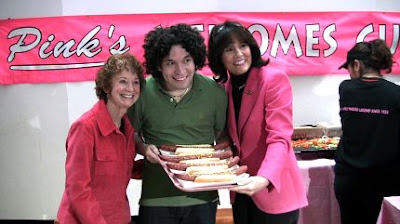
Extra mustard, puhleeze.

As pour moi? I’ve been a fan of The Dude’s since first seeing him guest conduct the Israel Philharmonic in 2008. Was I in the hall on this historic high-def day? Is Natalie Portman pregnant? (Read all about it here, as I never miss a chance to plug my BS post that recently went viral.) Simply put, The Leaf loves The Phil and was happily ensconced in her favorite seat, a bit above and to the left of the stage, giving her a swan’s-eye view of both orchestra and the dimpled Dude. I wouldn’t, however, have chosen Vanessa Williams to host the afternoon’s event, as she not only had trouble reading her cue cards, but her knowledge of classical music is probably far from vast. But going glam is also the point, as bringing this kind of programming to the masses is no easy feat.

He wants you: Is The Dude classical music’s savior?

So, what did The Dude choose for his first high-def close-up? Beginning with John Adams’ 1995’s Slonimsky’s Earbox (Adams is the Phil’s creative chair this year – his music was also used for Diavolo’s Fearful Symmetries, a collaboration with the Phil at the Hollywood Bowl last August which I wrote about for the New York Times), the concert was off to a rousing start. (Did I really say that, readers, forgive me.) The piece, inspired by Nicolas Slonimsky, a Russian conductor, musicologist, raconteur, etc., was minimalism to the max, meaning this sonic bouquet soared on horns, strings and plenty of percussion for a thrilling 13 minutes.

A youthful Leonard Bernstein: confident, handsome, ever mesmerizing.

After the curtain-raiser came Leonard Bernstein’s three-movement First Symphony (Jeremiah), written during the war, in 1942, when the composer was a mere 24. The Dude is fond of Lenny and it shows: Somber, with waves of stretched-out legatos, the work opens with a movement dubbed Prophecy, continues to a Scherzo that has hints of the composer’s West Side Story to come, then serves up an achingly gorgeous Profanation, the final movement replete with Hebrew text, sung here by the shimmering mezzo-soprano Kelley O’Connor. The work ended with Dudamel allowing silence to ring throughout the hall, his uplifted arms descending as if a molasses-infused Butoh dance were being performed. Astonishing.

A Bernstein mambo like no other.

But the best was yet to come. Beethoven’s Symphony No. 7 careened and caromed off the walls, its every sound bringing forth a new idea – something that doesn’t seem possible, as this delectable warhorse is probably playing somewhere in the universe at every moment of every day (or at least in Vienna on a regular basis). The orchestra was like an organic collective, fused to the maestro’s magical baton vocabulary. Bringing in and accentuating each instrument, from tympani and reeds to winds and fervently-sawing strings, The Dude coaxed out choruses of virtuosity. And with Beethoven’s numerous false endings forever in play, listeners were on the edge of their seats…ergo not leaving much leg room in some areas, a mini-design flaw of the hall, which Gehry dubbed Los Angeles’ living room. In any case, there’s no other living room in the country with such acoustics – and no other conductor in the world as exciting – and on fire – as Gustavo Dudamel. He even played an encore, Brahms’ Hungarian Dance No. 1, a perfect ending to a perfect high-def day.

Embracing the music. Photo courtesy of L.A. Philharmonic.


Postscript: More to come on The Dude’s second round of concerts in the new year – Mahler’s monumental Ninth Symphony.

Posted in 60 MINUTES, Beethoven, DEBORAH BORDA, DISNEY HALL, FRANK GEHRY, GUSTAVO DUDAMEL, JAY LENO, JOHN ADAMS, LEONARD BERNSTEIN, LOS ANGELES PHILHARMONIC, MAHLER, NICHOLAS SLONIMSKY, PINK’S, THE DUDE | Comments Off on The Dude Abides

Actress’s Daughter

By Mary Lyn Maiscott

I found Gwyneth Paltrow’s rendition of “Country Strong” (the theme from her upcoming movie of the same name) on the CMA awards a couple of months ago rather endearing. She was obviously nervous—despite, according to a quote in the press, having a Guinness beforehand, which she called her “new ritual”—which seemed, in a way, humble of her. I couldn’t help but wonder if it was a good idea for her to accompany herself on guitar (there was at least one other guitarist), but if she made any mistakes they weren’t audible, and her singing was just fine, if not spectacular in that big-voiced way of so many female country stars. (I didn’t think her magenta sky-high booties worked, but maybe that’s me.)

So in tribute to Paltrow’s upcoming role as Kelly Canter, apparently a kind of Faith Hill–meets–Britney Spears, here’s a sneak preview of what’s rumored to be (at least around TLR) Paltrow’s new country song, which is perhaps a bit closer to home for NYC’s “Gwynnie.”

Posted in Country Strong, Faith Hill, Gwyneth Paltrow, Kelly Canter | Comments Off on Actress’s Daughter

O, Blog Divine: Ring Out the Old, Bring On the New


By Victoria Looseleaf

Greetings, blogophiles, and welcome to my second annual best/worst list (with less on the latter, in keeping with my new positive ‘tude). In any case, I’m thrilled to say that since I finally learned how to post, not only is my colleague Robert Rosen ecstatic, but so is, well, Mr. Looseleaf, my father, who clicks on our site from his West Palm abode between our iChats.

Seriously, it’s been an e-ticket ride kind of year, one in which I traveled to France (twice), Spain and Israel, taught dance history to impressionable minds at USC and SMC, continued writing reviews and features for Dance Magazine and the Los Angeles Times, and finally – trumpets, please – made my debut in the New York Times, writing about L.A.-based Diavolo and the Los Angeles Philharmonic. In addition, I recorded a rash of radio stories for KUSC, saw a plethora of theater, watched scores of movies, read fabulous books, met new friends, deepened relationships with old friends and, most importantly, reestablished a bond with my sister, who became a first-time grams (I applaud her for admitting to same), upping my nephew/niece count to circa 25.

Diavolo’s Foreign Bodies, the prequel to Fearful Symmetries. Photo by Victoria Looseleaf.

Another Thing For Which I Am Grateful: My review of Black Swan, which went viral on 12/27 (we racked up nearly 35,000 hits in two days), and couldn’t figure out why….until Daddy called to tell me Natalie Portman was pregnant. Google searches went wild and peeps came to us from all over the world. Danke, merci, gracias and ty, folks. Keep those hits and comments coming, puhleeze.

An ubiquitous Natalie Portman: She’s ready for her close-up.

As for unmitigated faves on the cinematic front: I Am Love, starring Tilda Swinton, is an old-fashioned melodrama (think Mildred Pierce sans shoulder pads), for which I flipped. Not only does Ms. Swinton deliver a fearless performance as a refined – and married – signora falling in love with her son’s friend, but it showcases Milan and its glorious trappings – art, architecture, haute couture, food…as well as the music of John Adams. Granted, Mr. Adams didn’t write the score, but instead licensed out previously composed bits; nor did he care for the film, which, for some reason, made me love it all the more.

The incomparable Tilda Swinton: style icon; movie star; multi-lingual Goddess.

As to The King’s Speech, there’s been so much yakking I can hardly add to it, save that it was beautiful from start to finish. It won’t, however, win an Oscar for its director, Tom Hooper, but Colin Firth is a lock for best actor. I also hope that Geoffrey Rush pulls it out over Christian Bale (The Fighter). While Bale was fabulous, playing a crackhead is akin to portraying any challenged person, meaning it seems more like a trick than thespian profundity. Also, Bale is allegedly difficult and still has years ahead of him to snag the statuette.
Best buds: Colin Firth and Geoffrey Rush have plenty to talk about.

Kudos to Annette Bening in her affecting performance as the butch lesbian mother in The Kids Are All Right. Having struck out on stage recently (Bening’s Medea and The Cherry Orchard were both non-starters for me), she was soulful, believable and inspiring as the ‘husband’ of Julianne Moore in writer-director Lisa Cholodenko’s hands. Show me the sperm bank, cuz this is the future of society, one in which love is the great equalizer.

A quintessential lesbian mother – and playing a doctor, to boot!

Other fine films: A die-hard Coen Brothers fan, I spent New Year’s Eve with True Grit and couldn’t have been happier. To those who object to the anachronistic language, I say, ‘Get over it.’ And while Hailee Steinfeld is no Jodie Foster (but outshines Elle Fanning, whose turn in Sofia Coppola’s overrated Somewhere is by-the-book Hollywood gloss), the film is another gem from those quirky sibs. And speaking of quirk: The Social Network gets my vote as a cinematic game-changer (or not…that just sounds cool), but, being a Facebook devotee for years, yours truly loved the David Fincher film, Aaron Sorkin’s script and the perfectly icy geekazoid Mark Zuckerberg, as portrayed by Jesse Eisenberg. (The NYT has been running 10-page ads, well, 5 pages, which is still enough to make one gag, so check out Jesse in The Education of Charlie Banks instead.)


Onwards to your first trillion.

The Leaf also recommends Mesrine, starring the fabulous – and French, who knew – Vincent Cassel as the real-life gangster of the title (and don’t get me started about his underdeveloped character in BS). I also loved The Town, directed by and starring Ben Affleck in a welcome return to Tinseltown’s pantheon of hyphenates. I regained respect for him as Superman in Hollywoodland (too bad the film misfired), so to see his artistic growth in The Town is gratifying. Of course, I love heist flicks, especially when the perps don nuns’ garb, (The Company Men, on the other hand, is a dud, but might have been better if the dudes, including Ben, Chris Cooper and Tommy Lee Jones, had also sported wimples), so sit back and enjoy yet another look at the seamier side of Boston.

He’s getting to be a habit…

James Franco, who’s hosting the Oscars this year with Anne Hathaway (hmm…we’ll see how that works out), breathes beautiful life into Danny Boyle’s brilliant rendering of 127 Hours. In another year, poet/artist/writer/model/student Franco might have taken Oscar home, but it’s not gonna happen in 2011. Nor will it for Javier Bardem, whose staggering performance as a dying criminal in Biutiful lingers long after the film’s final frames. Director Alejandro Gonzalez Inarritu, who made an indelible mark with Amores Perros, has given us the flip side of Woody Allen’s Vicky Christina Barcelona. A provocative work, Biutiful, whose emotional core lies in a father facing his own mortality, raises more questions than answers (human slavery, immigration and communicating with the dead, to name a few), while also elevating Bardem to greatest-actor-in-the-world status (tied, for me, with Daniel Day-Lewis). Stay tuned for my upcoming KUSC-FM interview with Bardem and Inarritu. Until then, go see Biutiful. It may hurt, but pain, as we know all too well, is part of life.

Franco looks on, wondering: Will they click with Oscar…or should they just hawk perfume?

While Julie Taymor is desperately trying to launch Spider-Man: Turn Off the Dark (will it or won’t it…injure more performers, open, stay open, run until it recoups its $65 million, etc.) she scored with The Tempest. It’s Shakespeare at his most surreal, with Helen Mirren as Prospera (we love artistic license), and lots of stunning visuals, including Ben Wishaw as Ariel and lush island cinematography.

Oh, happy day: Dame Helen Mirren sounds off in Shakespeare.

Films To Avoid: Rabbit Hole, in which Nicole Kidman’s face is virtually unrecognizable and her acting equally vapid; Fair Game, about the real life Valerie Plame and her husband Joe Wilson, which showcased the always terrific Sean Penn, but made Naomi Watts seem nondescript; and Inception, starring Leonardo DiCaprio, whose furrowed-brow look continues to hoodwink moviegoers. Of course, there were lots more lousy films (Burlesque, anyone?), but I choose not to go there now, so let’s get back to the good stuff.

Mucho congratulations to Los Angeles Opera, the company directed by Placido Domingo, for bringing us Achim Freyer’s complete Ring Cycle, which absolutely rocked. Purists were upset, but the inventive $32 million production (Star Wars meets Valhalla), coupled with James Conlon’s indefatigable conducting, made for four of the greatest nights in Los Angeles theater since the Olympic Arts Festival in 1984. (Not that I was there…). I’m also giving a Looseleaf shout-out to the L.A. Phil and Gustavo Dudamel, who, in his second season, is still a wild ball of energy that keeps bringing new fans to Disney Hall.

L.A. Opera’s Ring Cycle, conceived and directed by Achim Freyer, pulled no punches.

Theater also had some major ups, including two revivals: The Subject Was Roses, with Martin Sheen playing the father in the Tony Award-winning play from 1964, in which he assayed the role of the son, triumphed; so did Judith Ivey in Tennessee Williams’ The Glass Menagerie. New plays included Rajiv Joseph’s Bengal Tiger at the Baghdad Zoo (a Pulitzer Prize finalist last year), which lands on Broadway in March with Robin Williams as the tiger. I also flipped for Chris Pine in Martin McDonagh’s The Lieutenant of Inishmore, a black comedy if ever there was one. All four productions were at the Mark Taper Forum, and I was fortunate to preview them for KUSC radio.

Grrrrr…!!

Hail to the iPad, no matter that e-books threatened to take over the printed word on real paper. But not in the House of Looseleaf, where books are precious and I cherish the intimate experience of burrowing into real lives, fictional lives, the past, the present, the unknown and the fantastical. Please check out my coverage of recent tomes, including those by Patti Smith, David Grossman, Jonathan Franzen, Keith Richards, Philip Roth, and the list goes on. Coming soon…my coverage of Stephen Sondheim’s Finishing the Hat and Stacy Schiff’s Cleopatra: A Life.

A still smokin’ hot Stone, Keith Richards.

As to the best of dance in 2010, chapeaux off to Diavolo’s Fearful Symmetries (read my Dance Magazine review here). Artistic director Jacques Heim is a Los Angeles treasure and we are lucky to have him. It’s unfortunate, then, that Diavolo does not have a home season in Los Angeles, three performances at the Broad Stage later this month notwithstanding. (In any case: Go!) I also saw some fabulous dance during my travels, especially at the Montpellier Dance Festival and the Lyon Biennale de la Danse.

I’ll drink to that!

In closing this rather lengthy post, then, we at The Looseleaf Report want to thank you again for visiting us this past year. And, in 2011, may you continue to experience good health, joy, prosperity, abundance, irony, gossip…in other words, all good things – in the arts and elsewhere – and above all, love—loads and loads of love, as personified by the newest member of the extended Looseleaf family…little Macie.

Posted in BLACK SWAN, COLIN FIRTH, DAVID FINCHER, DIAVOLO, FACEBOOK, JACQUES HEIM, JESSE EISENBERG, JULIE TAYMOR, KUSC-FM, L.A. OPERA, MARK TAPER FORUM, Natalie Portman, NEW YORK TIMES, TILDA SWINTON, TRUE GRIT | Comments Off on O, Blog Divine: Ring Out the Old, Bring On the New

Black Swan Redux & Blessings Galore


By Victoria Looseleaf

Who knew that we at The Looseleaf Report would be so completely and utterly tuned in to the zeitgeist at the end of 2010. And being a dance critic certainly didn’t hurt, at least not when it came time to writing about Black Swan. (Read my review here.)

Indeed, so much ink has been spilled over Darren Aronofsky’s film that it almost seems like gilding the balletic lily to say anything more at this point. But since our banner days of receiving nearly 35,000 hits earlier this week, my esteemed colleague Robert Rosen and I have been elated with the huge amounts of traffic generated from the original BS posting (it had, after all, been up since the flick’s opening December 3). Initially flummoxed, we soon discovered why the brouhaha, when my father, Mr. Looseleaf, iChatted me announcing, “Natalie Portman is pregnant.” Yes, TLR had gone viral, becoming the go-to site for pix of Portman and the father of her baby, choreographer Benjamin Millepied (whom I, by the way, had met in Cuba at the International Festival of Ballet).

Dance = the art of non-verbal communication. In other words, move, baby, move.

In keeping with the spirit of the times, then, here’s another video that seems a perfect end to the year: a mash-up of that camp classic, Showgirls, with Black Swan, which may or may not be camp. We leave that decision, devoted readers, to you. In the interim, we do know The Trocks are camp, Charles Busch is unequivocally camp (read my Los Angeles Times article here), and even I, your humble scribe, have been dubbed camp on more than one occasion, having produced and starred in some 400 episodes of The Looseleaf Report, the show that screamed camp, with guests ranging from George Carlin and Leonardo DiCaprio to Steve Allen and Dr. Timothy Leary.


“It’s now or never.” That’s what Elvis said.

So before I post my final musings of the year, here’s a toast to Black Swan, for having raised the barre at The Looseleaf Report, and to all of you, dear friends, who have been following us since the beginning, whether on cable access television, in print or in cyberspace. (The Leaf can also be found chatting with the coolest peeps from the visual and performing arts on classical KUSC-FM radio, so give a listen.) Blessings, then, and the best of times to you in the New Year and beyond.


Should auld acquaintance be forgot…

Posted in BENJAMIN MILLEPIED, BLACK SWAN, CHARLES BUSCH, DARREN ARONOFSKY, GEORGE CARLIN, LEONARDO DICAPRIO, LES BALLETS TROCKADERO DE MONTE CARLO, Natalie Portman, SHOWGIRLS | Comments Off on Black Swan Redux & Blessings Galore

Somewhere Gets Lost…

By Victoria Looseleaf

…but not in translation. Sofia Coppola is part of a celluloid dynasty. And while she, thankfully, gave up an acting career whose risibility climaxed in 1990’s The Godfather: Part III, directed by her father, Francis Ford Coppola, the neo-prodigal daughter does have a keen eye.

Death of an actor, Godfather-style.

And a fondness for luxe hotels. Coppola’s 2003 Oscar award-winning Lost in Translation, which I absolutely adored, featured Bill Murray in existential mode in a Tokyo high-rise; the Versailles of her Marie Antoinette was another kind of lodging animal, those pulsating pinks aside. With Somewhere, Coppola comes closer to home (though she was living in Paris when she wrote the flick), setting much of it at Hollywood’s Chateau Marmont, showcasing the hotel’s movie star trappings and attendant inanities, the stuff she knows so very well.

Hipsterdom squared: Sophia Coppola’s insider view of celebrity.

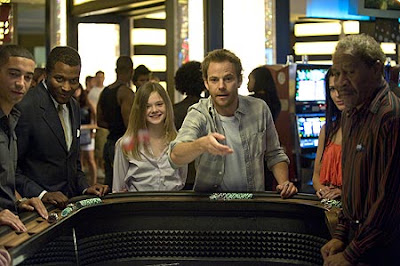
Lasering her focus on action star Johnny Marco, played by Stephen Dorff, whose career I must admit, I had never followed (nor do I plan to in future, unless he is, improbably, gonna morph into Javier Bardem), Coppola is fond of long tracking shots, twin pole-dancers (an amusing divertissement once, the second time the deadly earnest duo cavorts is overkill), and the ludicrous perks of celebritydom. All of this navel-gazing is prelude to Johnny renewing his relationship with his 11-year old daughter, Cleo (Elle Fanning, part of another, uh, theatrical dynasty, if you will). Which is, no doubt, the point: Johnny needs some meaning injected into his vapid lifestyle, cuz sex, drugs and sycophants aren’t cutting it for him.

Ah, the joys of fatherhood: Teaching your 11-year old daughter Craps in Vegas.

But to quote the New Yorker’s David Denby: “It’s time Coppola risked losing her cool; it’s time she made something happen.” (A.O. Scott, writing in the New York Times, had a vastly different take, calling the film, “exquisite, melancholy and formally audacious” – whatever that means.) Alas, little does happen and we are left at the end with what we were given at the film’s outset – Johnny laying lots of rubber as he tools around in his oh-so-fabulous Ferrari.


Somewhere, beautifully shot by Harris Savides, is a trifle that would get little ink – not to mention Venice’s Golden Lion Award for Best Picture this year – were it not for its pedigree. Indeed, the opus, which has been rhapsodized to the point of being dubbed a tone poem (okay, I’m guilty of that…), reveals less about the narcissistic Hollywood personality than what we routinely get barraged with on TMZ, except Coppola’s vision has far better music. (The score is by Phoenix, the French rock band whose lead singer, Thomas Mars, happens to live with Coppola and is the father of their child: Nepotism lives, fersure.)

Keeping it all in the family, including the baguettes.

That said, however, c’est moi who is also part of the problem – I’m one of those fawning journalists who participated in a press junket at the Four Seasons Hotel, which Coppola, herself, adroitly tackles in the film. So here’s the result of those, er, mostly reverent press interviews – in this case, four mini-chats for KUSC-FM radio, two with Ms. Coppola and two with Mr. Dorff.

Life at the top – or at least on the terrace of the Four Seasons Hotel. Make mine a double, please.

Posted in CHATEAU MARMONT, ELLE FANNING, FERRARI, FOUR SEASONS HOTEL, FRANCIS FORD COPPOLA, PHOENIX, SOFIA COPPOLA, SOMEWHERE, STEPHEN DORFF, THE GODFATHER | Comments Off on Somewhere Gets Lost…

Heartfelt Harmonies for the Holidays – and Whenever!

By Victoria Looseleaf

Cuddle up in front of a cozy fire, crank up your CD player and get swooped away by the power of music – courtesy of Harmonia Mundi USA. And who knew that this wonderful indie music label was headquartered in France? Certainly not I, until I wandered into their shop in Lyon this past September while covering the fabulous Dance Biennale. (Read my review here.) A Latin phrase meaning harmony of the world, HM has been releasing gorgeous – and important – music since 1958.

In 2010, boxed sets continue to be all the rage. Check out the 10-CD set, Early Music, with various artists performing a diverse selection of tunes from before 1600. Offering more than 12 hours of glorious music, these discs comprise a unique guide to the fascinating melodies of the period (and there are, trust me, plenty). Linking the tunes with the historical and geographical context of the times, the discs include detailed booklets illuminating the eras. Think Henry VIII – or rather, Jonathan Rhys Meyers in Showtime’s The Tudors – where dancing – along with sex, eating and beheadings – are recurring activities to the popular Renaissance music of the day.

Jonathan Rhys Meyers is Henry VIII, dancing the Volta with Anne Boleyn, her head still intact.

Moving forward through time is Mozart’s Die Zauberflote (1791), one of my all-time favorite operas, and not merely because of the beloved Queen of the Night aria. Sure, it’s a trip seeing the work live onstage (uber-director Julie Taymor – she of Broadway’s soon-to-open Spider-Man: Turn Off the Dark – created a particularly memorable production for the Metropolitan Opera in 2004), but being able to listen to Mozart’s two-act masterpiece, including in the car, is always a delight. This new double CD recording, featuring Akademie für Alte Musik Berlin and conducted by Rene Jacobs (the Belgian maestro snagged a Grammy for his Marriage of Figaro in 2004), also includes a 314-page booklet with a full libretto. Kudos to Jacobs, then, who fuses the opposing strands of Mozart’s tale of light and dark, fire and water and the heavens and Earth into a performance as enchanting as it is profound. Magnifique!

Finally, this being Nutcracker season, a bit of Tchaikovsky is in order. And who won’t fall in love with Maestro Daniele Gatti leading the Royal Philharmonic Orchestra in these visionary, romantic readings of Tchaikovsky’s last three symphonies. A specially priced reissue, the trio of discs also includes the composer’s Capriccio Italien, his Romeo and Juliet overture and the much-loved Serenade for Strings, which choreographer George Balanchine made even more famous in his 1934 ballet, Serenade, the Russian genius’ first American classic that continues to be performed around the globe to this day.

The physical embodiment of Tchaikovsky’s music is George Balanchine’s classic, Serenade.

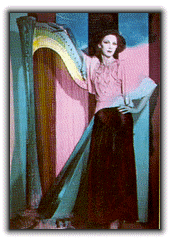
So, put up your feet, quaff an eggnog – or two – and revel in music that not only spans the centuries, but will surely capture hearts and replenish souls. (And, as an erstwhile professional harpist who played more than her share of holiday soirees – schlepping the harp, oy, was no easy feat – I can vouch for the eternal nature of these recordings, no matter the season. In any case, apologies, for injecting myself into this post with a rather, er, shameless plug, but this is, after all, The Looseleaf Report…) Ergo, cheers, friends!

Posted in BALANCHINE, DANIELE GATTI, HARMONIA MUNDI, JONATHAN RHYS MEYERS, JULIE TAYMOR, LYON, METROPOLITAN OPERA, Mozart, RENE JACOBS, SHOWTIME, SPIDER MAN, TCHAIKOVSKY, THE TUDORS | Comments Off on Heartfelt Harmonies for the Holidays – and Whenever!

Just Kids = Just Brilliant

By Victoria Looseleaf

Poet, musician, voice of a generation. I’m not talking Bob Dylan, though he, too, is decidedly all of the above, but I speak of the one and only Patti Smith. A gorgeous love story, a heartbreaking elegy and, most of all, an artist’s primer, Just Kids was a breakout hit when it was published by Ecco earlier this year. And then, it snagged the 2010 National Book Award, a major coup on all counts (even Jonathan Franzen’s fabulous Freedom came up short in the fiction category), making Smith’s recently released paperback a must-have to put under the tree, the menorah, on the bookshelf, wherever.

In other words, get thee a copy and read it immediately. Smith is an artist nonpareil and I have been a fan since her debut album, Horses, which not only holds up, but continues to inspire. Smith has said that, in her penning of this stunner, she took several cues from literary autobiographies (and truly, how many of these exist today, in an era when the celebrity tell-little is worshipped by both publishers and a middle-brow public), books such as The Bell Jar by Sylvia Plath and Genet’s The Thief’s Journal.

From the horse’s mouth: The inimitable Patti Smith

In not only giving us her true self, Smith was also able to bring the late photographer, Robert Mapplethorpe to life again. (Having died of AIDS in 1989, Mapplethorpe’s legacy is shrouded in scandal, his photos’ blatant homoeroticism an assault to numerous artistic powers-that-be, including organizations such as Washington, D.C.’s Corcoran Gallery. But Mappplethorpe’s art, which also teemed with sensuous studies of flowers – hello, calla lilies – is of the highest order and definitively speaks for itself…gloriously.)

And so it is the Smith/Mapplethorpe relationship that is at the heart of Just Kids, giving us an inside glimpse into a bygone era – New York in the late ‘60s and early ‘70s – and what it takes to be an artist. Astutely observed and affectionately portrayed, the book is mythically compelling, exquisitely written and utterly authentic.

The cala lillies are in bloom again…

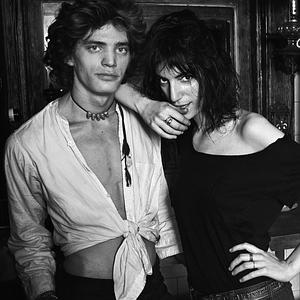
As pour moi: How do I love Patti Smith and Robert Mapplethorpe; let me count the ways.

I, too, checked into the Hotel Chelsea (which is, sadly, for sale…), walking the ghostly halls of that fabled 23rd Street institution, albeit a bit later, in order to follow my dreams. Falling in love with Patti’s music and Robert’s photos, I, too, was once an innocent wandering the streets of the Big Apple, seeking, learning, lusting and carrying on in my own fashion – inhabiting a parallel universe I can now relive through Patti’s magnificently rendered prose. Not for nothing is my favorite aria, Vissi d’arte, from Puccini’s Tosca. “I lived for art, I lived for love.” And so was that melody playing when Smith got the news of Mapplethorpe’s death. As for me: I still do live for art – and for love – but with no worries that I shall be jumping off a parapet to my death anytime soon (as Tosca did). Nor shall Patti Smith, whose book sings with truth and nobility. Thank you, Ms. Smith, for your singularly rhapsodic voice.

The woman rocks!

Posted in ANDY WARHOL, Bob Dylan, DYLAN THOMAS, ECCO, HOTEL CHELSEA, JUST KIDS, NEW YORK CITY, PATTI SMITH, ROBERT MAPPLETHORPE | Comments Off on Just Kids = Just Brilliant

Pointe Blank: The Tragedy of Black Swan

By Victoria Looseleaf

Waterboarding is nothing compared to wearing pointe shoes. Or at least that’s what Natalie Portman would have us believe of her Nina Sayers, the ballerina she portrays in Darren Aronofsky’s latest flick, Black Swan. Indeed, the gorgeous actor, who studied ballet as a girl and trained intensely for the role – alas, she is not up to terpsichorean snuff – called pointe shoes, “torture devices,” adding, “they feel very medieval.”

Dubbed a horror/thriller/cum psychological study set in the rarefied world of ballet, the $13 million Fox Searchlight film will turn little girls off to the art form for – well, at least half a Twitter generation – or two. Coming some 60 years after Michael Powell and Emeric Pressburger’s masterpiece, The Red Shoes, which had tutu-wearing tots flocking to the barre, Swan is, like its namesake character, Odette/Odile in Swan Lake, much more of a bipolar affair: With emphasis on the manic, including a lesbian make-out scene – talk about ruffled feathers – and food and drug issues (the banes of ballerinas), the film takes us on a terrifying, all too real, unreal ride.

Moira Shearer in a moment of pre-death ecstasy in The Red Shoes.

Portman, vying to be the Swan Queen, is not only up against herself – can she transform from the white, virginal Odette to the evil, dark Odile of the mythological dance tale – but is also up against her rival, Lily, perfunctorily played by Mila Kunis. Nina, too, is battling her mother, Barbara Hershey, a cornucopia of aborted dancing dreams, who also bears an uncanny resemblance to Portman, minus the Botox and collagen lips. Then there’s Thomas Leroy, the ballet company’s artistic director, here played by the fantastic (and French – who knew), Vincent Cassel, the powerhouse in Mesrine and Eastern Promises (and, I hear, those Oceans movies).

In any case, let the games begin.

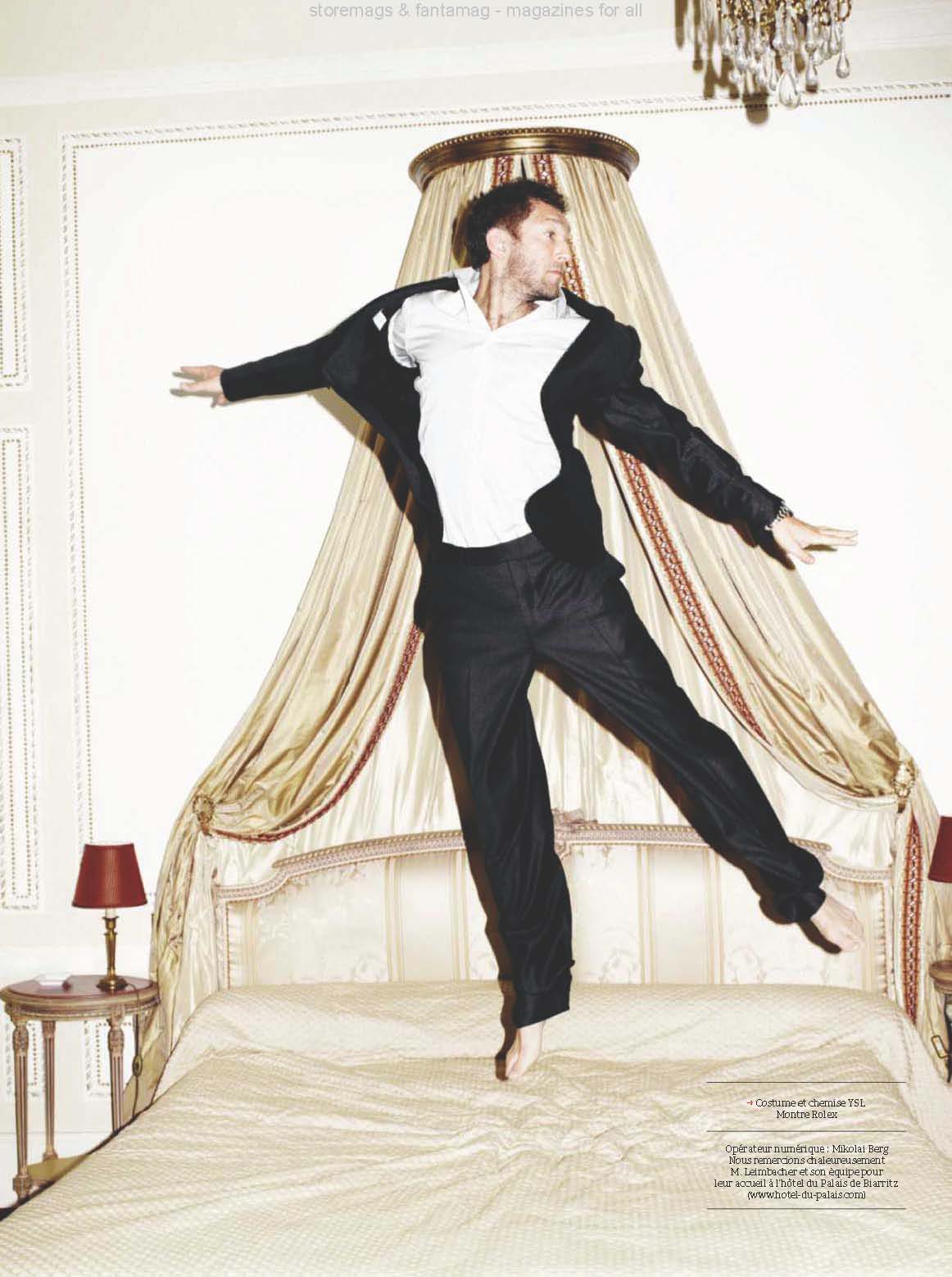
Vincent Cassel shows some fancy footwork of his own.

Cassel has said he took his cues from Michael Bennett (Chorus Line), Balanchine and Baryshnikov – not Anton Walbrook’s Lermentov from The Red Shoes, who had taken his cues from Serge Diaghilev, the titanic impresario of the Ballets Russes (who may or may have not driven Nijinsky insane…), making Black Swan a Chinese box of elephantine proportions (or, as the New Yorker said, “a tray of Russian Easter eggs.”)

Showing skin: sexy and swan-like, sans pointe shoes

Aronofsky has likened this film, which took him a number of years to make (he was surprised that the insular ballet world was so difficult to penetrate, making the late Robert Altman’s The Company look either like child’s play or absolutely brilliant), to The Wrestler. Yes, there’s bloodletting and backstabbing, but comparisons end there (what – no staple guns?). Nor do we see Portman’s Nina behind a deli counter slicing ham like we did Mickey Rourke, though Winona Ryder, in a sadistic bit of casting is the pushed-aside prima, who, after trying to kill herself ends up in the psycho ward.

The White Swan and Her Prince

What we do see, however, is an odd mixture of melodrama, sumptuous photography and choreographic interruptus. With dances by Benjamin Millepied (how great a name is that for a ballet denizen, now Portman’s beau), the footwork, replete with muscular spins and leaps (none of which were executed by Portman but by ABT soloist Sarah Lane – shades of Flashdance), are akin to a series of fragmented, neo MTV-like moves. As for Portman’s arms (portman de bras, hahaha), let’s just say they’re serviceable, but she’s no Pavlova. Then there’s Portman’s growing list of bodily aberrations: coarse hairs inexplicably sprout from her back a la Cronenberg/Goldblum’s The Fly; her fingernails are shed like snakeskins; and the requisite bloodied feet emerging from pink satin pointe shoes, which may horrify ballet newbies, are, sadly, old hat to career dancers.

Is it the pointe shoe, then, that tortures, or the notion that Black Swan, by missing the mark, proves that this most ethereal of art forms can never again reach the cinematic heights it did with Moira Shearer, a true ballerina, who danced her way to death and into the world’s consciousness in the Powell classic. I wanted to love this film, and though I don’t totally agree with Carla Fracci, erstwhile ballet superstar who called Black Swan, “an absurd film that renders a terrible service to the ballet world,” I can recommend it to masochists, voyeurs and thrill-seekers. Which, I suppose, would account for a fairly large audience these days.

What’s the pointe?

As for Portman snagging an Oscar, it would be like Nicole Kidman’s win for donning that nose in The Hours. Jennifer Homans, in an epilogue to her new history-of-ballet book, Apollo’s Angels (Knopf), declares that ballet is dying (I disagree, but that’s another story). Let’s hope, then, that Aronofsky and company aren’t nailing the coffin shut with Black Swan.

Posted in APOLLO’S ANGELS, BARBARA HERSHEY, BENJAMIN MILLEPIED, BLACK SWAN, DARREN ARONOFSKY, JENNIFER HOMANS, MILA KUNIS, Natalie Portman, NIJINSKY, PAVLOVA, VINCENT CASSEL, WINONA RYDER | Comments Off on Pointe Blank: The Tragedy of Black Swan

On Swans, Seasons Greetings and Boxed Sets: Calling All Balletomanes

By Victoria Looseleaf

With swans in the air, or at least on screen (my review of the new Darren Aronofsky film, Black Swan, is coming, not to worry, while in L.A. Opera’s misguided premiere of Lohengrin, peeps sing about the bird, and there is some swan imagery on banners), I thought I’d take a moment to laud dance on film. Or at least on DVD. (And to say YouTube has been a godsend for dance lovers – and teachers of dance history – is an understatement. I love seeing Anna Pavlova in The Dying Swan, the cool collages of dancers such as the tragic Vaslav Nijinsky, and up-to-the-millisecond footage of all the hot young Russian and Cuban dancers. It’s heaven in cyberspace.)

Rare footage of the one and only Anna Pavlova.

But snippets and often poorly shot films can only go so far for the hard-core aficionado. And while the Metropolitan Opera has been at the forefront of broadcasting full-length productions on HD in 21st century movie theaters (stadium seating, Dolby sound and gallon tubs of fake-buttered popcorn can either enhance or detract from the viewer’s experience), dance has other issues (unions, for one), that, for the moment, are preventing filmed performances from being shown at your neighborhood upscale mall.

Thanks, then, are in order, for good old-fashioned DVDs (when will they become obsolete?), and several of the companies that provide them. For archival performances, VAI (Video Artists International), and VAI Audio, is the Rolls Royce of cultural offerings. While their current DVD selection is diverse – from comedy, docs, jazz and recitals, to instrumental performances, conductors and orchestras, it’s VAI’s vintage ballet discs that are divine.

My right foot (Rudolf Nureyev)

So, if you’re Jonesing for Rudolf Nureyev and Erik Bruhn on Bell Telephone Hour (and who isn’t, yeah…), this is the place. Other primo performances abound, including Alicia Alonso: Prima Ballerina Assoluta. Getting to know Madame Alonso personally in the last few years while attending the International Festival of Ballet in Havana (hosted by Nacional Ballet de Cuba, the company she founded with the help of Fidel Castro, which means the communist dictator can’t be all bad), I can say I’m equally thrilled to be able to watch her in signature roles on my flat screen TV. From Swan Lake and Romeo & Juliet to, of course, Giselle, the great Alonso jumps off the screen with dramatic intensity and astonishing technique.

Alicia Alonso in her signature role, Giselle

God may be in the details (or is that the devil), while gold is also found in performances of Maya Plisetskaya, Vladimir Vasiliev, Maria Tallchief and, in contemporary ballet, Jose Limon. In addition, VAI has put together two volumes featuring the brilliant Nina Ananiashvili, while Jacques d’Amboise’s Portrait of a Great American Dancer is an absolute delight. (Full disclosure: I worship at the altar of d’Amboise, who founded the National Dance Institute, and am looking forward to interviewing him in 2011 for his new memoir, I Was a Dancer, to be published by Knopf.)

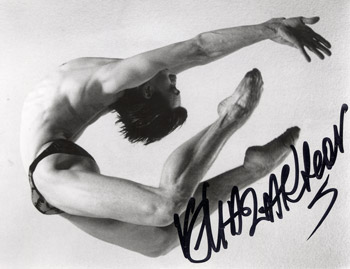
Following in Nureyev’s fabulous footsteps, Vladimir Malakhov

Then there’s 1996’s True Prince (not the pop star), but a look at the incomparable Vladimir Malakhov, who, since 2004, has headed Staatsballett Berlin, an organization of some 88 dancers. (Another disclosure: I’ve also interviewed this ballerino over the years, but none was like the story I did for the Los Angeles Times. As Vlad was going to be staging a ballet based on Hal Ashby’s cult film, Harold and Maude, I arranged a chat between him and the film’s star. Talk about a high art kitschfest!) In any case, Malakhov is a gift, with True Prince a lovely rendering of the dancer as supreme artist and star.

Malakhov and Cort schmoozing about Harold and Maude, the flick that made Cort a star in 1971.

Just how cruel is ballet? How competitive? How painful? For a diverse and comprehensive look into this intense world you’ll want to check out Natalie Portman’s portrayal of Odette/Odile in Black Swan, but you’ll want to own The Art of Ballet, four classic dance docs in a special edition boxed set from First Run Features. The Dancer follows a gifted young ballerina through years of training at the Royal Swedish Ballet School and as she develops into an international star. As my colleague, Anna Kisselgoff, wrote about the film, “Anyone interested in ballet will want to see The Dancer.”

The three other discs are: Ballerina, a profile of five world-class dancers; Etoiles: Dancers of the Paris Opera Ballet; and Prima Ballerina, a double portrait of two superstars of contemporary Russian ballet, Svetlana Zakharova of the Bolshoi and Ulyana Lopatkina of the Mariinsky. (Disclosure redux: I did an in-depth phoner at 1 in the morning with Zakharova – through a translator – for an article I was writing for the Los Angeles Times. Unfortunately, the prima got injured and was unable to come with the company to Orange County, so pfft – there went my article.

Long live the swan, as danced here by the Bolshoi’s Svetlana Zakharova.

Escape, then, balletomanes and lovers of the human body, into the world of tutus, tights and tiaras…and put a few of these delectable DVDs on your holiday gift list now.

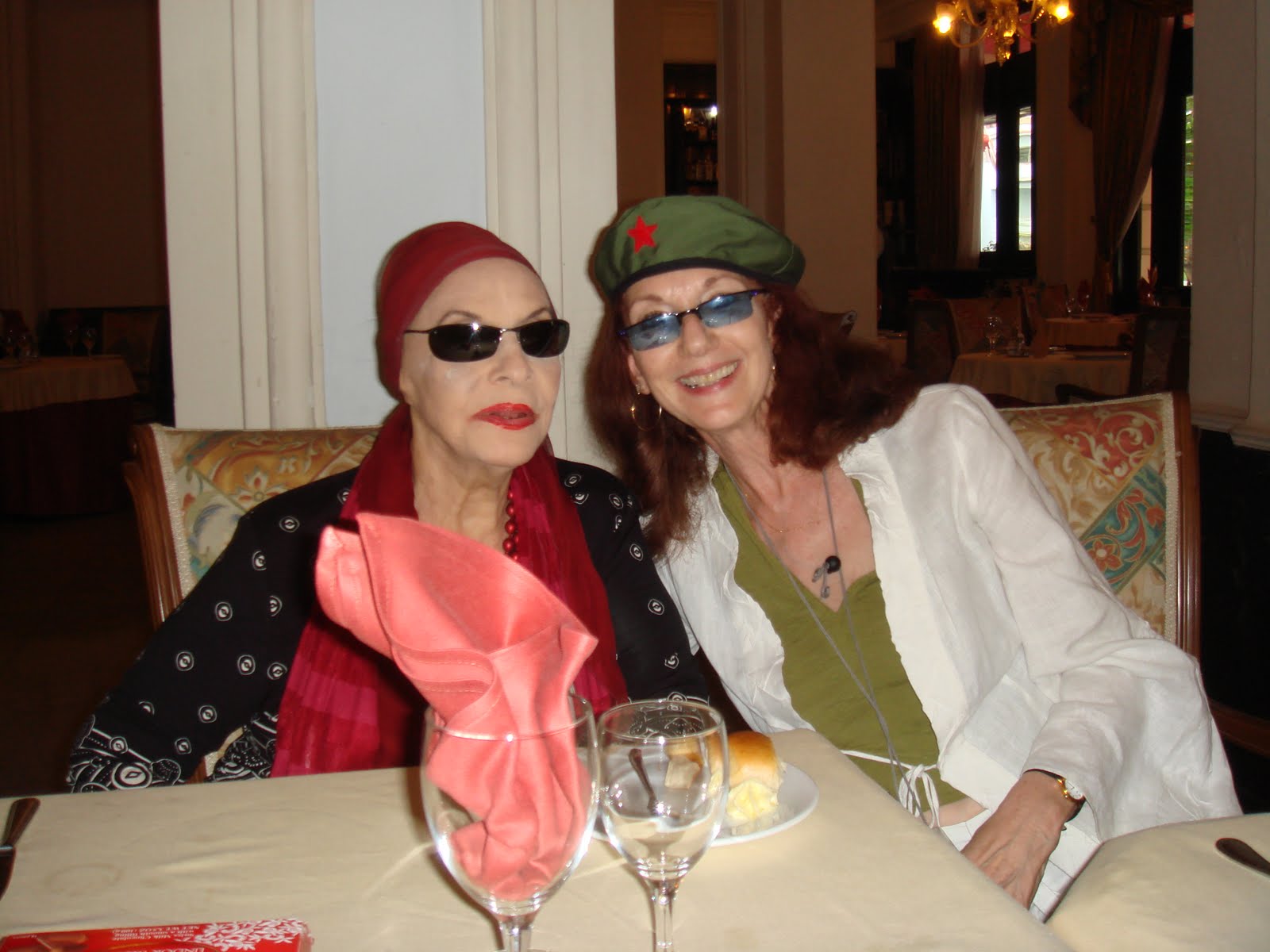
Below: Alicia Alonso and Victoria Looseleaf in Havana at the International Ballet Festival, 2006.

Posted in ALICIA ALONSO, BLACK SWAN, BUD CORT, DARREN ARONOFSKY, FIDEL CASTRO, FIRST RUN FEATURES, KNOPF, LOHENGRIN, LOS ANGELES OPERA, NIJINSKY, NUREYEV, PAVLOVA, SVETLANA ZAKHAROVA, VAI, VLADIMIR MALAKHOV | Comments Off on On Swans, Seasons Greetings and Boxed Sets: Calling All Balletomanes

Start Him Up: Keith Richards Spills the Book Beans

By Victoria Looseleaf

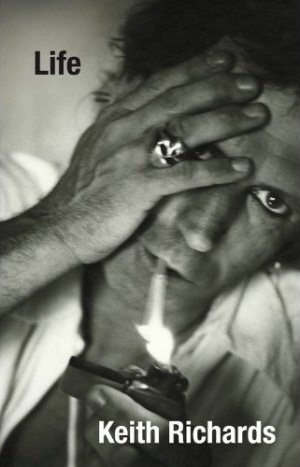
A drug-saturated, ego-obsessed, musical and literary roller coaster ride, Keith Richards’ 469-page tome, Life, published by Little, Brown and Company (564 pages counting the index), has been touted as a memoir of Proustian proportions, his madeleines a trove of letters and journals kept for nearly 50 years. One of pop music’s iconic figures, Richards has not only been there, done that, but lived to yak about it, with a lot of help, no doubt, from author James Fox.

Life, which has exploded onto the 24/7 Twitterati culture with the force of a Scud missile (is that oxymoronic or merely outdated?), has received non-stop coverage, from the sacrosanct New York Times to the little peeps’ comments on Amazon. And though the book – the Citizen Kane of rock memoirs – has recently been bumped from its perch atop the NYT bestseller list by another well-known dude (let’s just call said dude an erstwhile war-mongering president), the two tomes have little else in common – aside from the fact that both men reportedly received the non-paltry advance of $7 million and that in their tellings, they also each renounce addictive substances in order to achieve some kind of redemption.


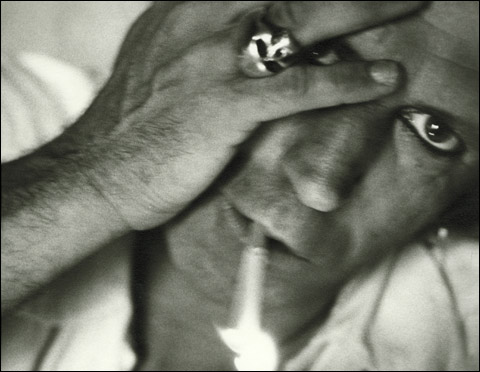
Dealt a winning hand(s): the gnarly, gorgeous guitar-picking appendages of Keith Richards

But I gotta say: I loved Life. By turns frank, hilarious, disarming and astonishing, its narco-induced anecdotes, riffs about the actual music-making and the inevitable inside dish on the Stones, including Richards’ symbiotic/psychologically-charged relationship with Sir Mick Jagger, the book, well, rocks. Indeed, I found myself relating on many levels: “All the good ones die on you,” writes Richards about yet another crony who goes down from drugs, among whom were Billy Preston and Gram Parsons. (Keef, as he refers to himself in letters written to a beloved aunt, did not cotton to original Stones’ guitarist Brian Jones, so there’s no love lost in those tawdry tales.)

The crack guitarist (no pun intended – Keith says he never did crack cocaine, that he didn’t like the smell of it, the ritual behind it…), who certainly has had more lives than any cat in creation, writes about being a junkie for years, but maintains that that was three decades ago. In other words, ‘Goodbye to all that…’


And hello to Richards, he of the volcano-pitted face, who certainly must be the luckiest guy in the world. Sure, he had his run-ins, i.e., drug busts, with the law, including in Arkansas and Canada, but he was like Teflon, man, with no time spent in the Big House. (Curiously, it’s no consolation to the very dead Jim Morrison that Florida’s departing governor, Charlie Crist, wants to posthumously pardon the former Doors frontman for two criminal convictions received after some, er, very bad behavior at a 1969 concert in Miami.)

The beat goes on…

Okay, so not only did Richards not die from drugs, including cigarettes, or at the hand of a disgruntled fan, nor from any of the nasty stuff that’s plagued other rock idols, this guy still rules on guitar, writes killer songs and, well, lives in Connecticut, canyabelieve, with a beautiful wife. Not exactly to the manor born, but to the manner gotten at a very young age.

From the horse’s mouth.

As to Richards’ vast fortune (and it his huge, unlike what he says about the size of Jagger’s manhood, or “tiny todger”), some of the money – he even hawks Louis Vuitton luggage – goes to various worthy causes, with Life now adding exponentially to the piles. While leading and living to write about a most incredible journey befitting a multi-platinum, zillion-selling recording artist, Richards also narrates a brief introduction to Life the Audiobook. Clocking in at 23 – count ‘em – 23 hours – this CD has the one and only Johnny Depp bringing the rock God to, if it’s possible, earthly life. Talk about a pair of post-modern pirates!

Posted in CHARLIE CRIST, KEITH RICHARDS, LOUIS VUITTON, MICK JAGGER, PROUST, THE DOORS, THE ROLLING STONES | Comments Off on Start Him Up: Keith Richards Spills the Book Beans