Diane Keaton’s Then Again: La-Di-Dah Divulged

By Victoria Looseleaf

Annie Hall. Reds. The Godfather trilogy. But before those incredible flicks, there was this: Diane Keaton* was one of the only members of the original Broadway cast of Hair – to keep her clothes on. And she is not reticent to talk about bodies in her touching memoir, Then Again (Random House).

Indeed, who knew that Woody Allen had a, er, great body? Hmm. This is one of the reveals in the book that is part Diane Keaton, part valentine to her two adopted children, Dexter and Duke, and part tribute to Dorothy Hall Keaton, the actor’s mother, who died in 2008 after fading from Alzheimer’s and whose journals (below), help comprise this exquisitely rendered tome.

But back to the body: Keaton, we were surprised to learn, admits to having struggled with bulimia for a number of years. Yes, this trend-setting fashionista (ooh, the hats, the ties, the vests…), graphically chronicles the huge amounts of food she downed – only to regurgitate said comestibles – in one sitting. (Hello, hamburgers, steaks, ice cream, hot apple pie, KFC, fries with blue cheese and ketchup – we think we’ll try that dish – and more).

In so doing (not sitting, but hunched over the toilet), she tells us, she’s adding her name to an already familiar list of food abusers, one that includes Jane Fonda (click here for our interview with that legendary star), Princess Diana, Karen Carpenter and today’s waifs such as Lindsay Lohan and Mary- Kate Olsen. (We’re not much into the last two names, and think they would do better to, well, read a book on occasion; for more on body fascism, click here.)

Food binging behind her, Keaton is nothing if not sensitive (her being extremely smart goes without saying). So while we dig the above-mentioned revelations, we find that the author’s deep feelings for her mother, who excelled at collage-making and photography but never had the opportunity to be a professional (Dorothy was a dutiful wife and mother of four), are beautifully mined here. Indeed, extracts from her mother’s perceptive letters and journals are artfully arranged in patterns alongside Keaton’s own reflections on her mother’s life. (A shout-out to the design team at Random House is in order, fersure!)

And while the mother/daughter relationship courses through the book, we admit that we especially loved learning about the three main squeezes of Keaton’s life, pre-adoption, that is, in spite of the fact that none of the flames proved romantically enduring. About Woody Allen, who helped her win a well-deserved Oscar for Annie Hall, (which also featured a weird-even-then Christopher Walken, one of our favorite hoofer/actors), Keaton writes that Allen is a genius who remains “borderline repulsed by the grotesque nature of my affection.”

Although she doesn’t go into detail about Allen’s body, Keaton does cut to the heart of what she feels about her thespianism: “Without a great man writing and directing for me, I was a mediocre movie star at best.” Hah – it should be that simple. Diane, you’re far too modest.

She also takes cues from Warren, as in Beatty, who directed her in Reds and whom she describes as, “smart, lawyer-smart … a mind-blowing dream of drop-dead gorgeous.” Keaton was smitten, writing: “Once Warren chose to shine his light on you, there was no going back.” (We’re not averse to having that light shine on us some time, nor the light of his sister,  Shirley MacLaine, who joins the cast of Downton Abbey next season and is receiving an AFI Lifetime Achievement Award in June.)

But we digress: Another Keaton confession is that Al Pacino had been the love of her life, from his, “killer Roman nose” to his “Al-ness” (okay, that’s our word, not hers, but we, too, worship at the altar of Pacino, his recent bad movie, Son of No One, aside). Keaton and Pacino made the Godfather films together, beginning their affair during GF I, and resuming it years later, with Keaton’s marriage ultimatum putting the kibosh on their hearts-and-flowers’ bond. (We never interviewed director Francis Ford Coppola…some day, perhaps, but we did interview his daughter, Sofia – who made a misguided appearance in GF III – for her equally misfiring, Somewhere.) And somewhere in her book, Keaton, ever alert and open to all that life offers, acknowledges that Pacino made her “think about the difference between being an artist and being artistic. I knew where I stood. I was artistic.”

Bah. Diane Keaton has always been an artist. And still is. We loved Then Again for its charm, frankness and originality. But, then again, that is what Diane Keaton, now 66, remains, her extraordinary acting only part of the equation. Besides, anyone who gets to kiss both Keanu Reeves and Jack Nicholson at age 58 in Something’s Gotta Give, is, in our book – and hers – absolutely fabulous!

*Full disclosure: Having been a huge fan of Keaton’s, we had the pleasure of being with her on various occasions over the years, notably dinners celebrating Grace Johansen. A spitfire of an elderly lady that Keaton cast in her documentary, Heaven, Johansen died in 2000. The nonagenarian also appeared on our now-defunct cable access TV show, The Looseleaf Report, with Keaton there for moral support and Bud Cort helping conduct a wonderfully quirky interview. (Talk about quirky: Click here to read our LA Times interview with Cort and ballet superstar Vladimir Malakhov, in which they discuss a terpischorean Harold and Maude.) Carol Kane, Cort and Keaton also helped Gracie during the last years of her life, ultimately arranging a beautiful service for her at Hollywood Forever Cemetery. (Diane, at left, with her son Duke)

Posted in Uncategorized | Tagged , , , , , , , , , , , , , , , , , , | Comments Off on Diane Keaton’s Then Again: La-Di-Dah Divulged

Diavolo Does It Again

By Victoria Looseleaf

…and this time in its home town. It’s been too long since Diavolo, one of Los Angeles’ premiere dance troupes, performed in Southern California. Founded in 1992 by artistic director Jacques Heim, the company did strut some of its signature hyper-physical stuff last July at the Watercourt at California Plaza as part of Grand Performances’ annual summer concerts. But the troupe shared a bill and its offerings were more akin to a tasting menu. (Click here to read about that program, which also has beaucoup de links to Diavolo’s history and our myriad writings about the company.)

Wait no more, Angelenos: Tonight the troupe takes to the stage of the new Valley Performing Arts Center in Northridge (we haven’t been there yet and have only heard good things, its 405-adjacent location aside); and on March 22, Diavolo heads to Irvine and the Barclay Theatre as part of its 17-city, four month tour.

On the programs are two favorite works: the rollicking boat number, Trajectoire (above) and Fearful Symmetries (left). Reviewing the 1999 premiere of the former for the L.A. Times, we wrote that it was “more Dramamine than drama.” As Heim is constantly tweaking, revising and editing, Trajectoire has since been elevated to classic status. So, too, has Fearful Symmetries. Since its 2010 premiere at the Hollywood Bowl, with Bramwell Tovey conducting the Los Angeles Philharmonic in the music of John Adams (click here for our New York Times story), this jaw-droppingly stunning work has proven enormously popular.

We admit it: Just as we’re addicted to Downton Abbey (click here for our musings on our TV DOC – drug of choice), we’re hooked on Diavolo, albeit we have been for a lot longer. Indeed, happy 20-year anniversary, Diavolo. We look forward to next year when you return to the Hollywood Bowl with the final installment of your collaboration/trilogy with the L.A. Philharmonic, “Fluid Infinities,” set to the music of Philip Glass. (Click here for some of our recent Phil coverage, cuz we’re crazy about Gustavo Dudamel, aka, The Dude, who’s appearing on Sesame Street February 6.)

And for more about Diavolo’s fiendishly busy touring sked, click here to read our current Dance Magazine news story on these fearless artists who continue pushing the boundaries of dance, dreams and death-defying moves.

Posted in Uncategorized | Tagged , , , , , , , , , | Comments Off on Diavolo Does It Again

Squirm-In-Your-Seat Theater: Clybourne Park

By Victoria Looseleaf

Plus ça change, plus c’est la même chose. The more things change, the more they stay the same. Ah, the French certainly have a way with words. And so does playwright Bruce Norris. So much so, in fact, that he snagged the Pulitzer Prize for Drama last year for his prickly play, Clybourne Park, now titillating audiences at the Mark Taper Forum through February 26. (It also won the 2010 Olivier Award for Best New Play in London.)

A dissection of race, gentrification and real estate – with a dose of turf wars thrown in for bad measure – Clybourne is a dramatic imagining of events taking place before and after Lorraine Hansberry’s seminal work, A Raisin in the Sun. (This is a work so iconic that even Sean “P. Diddy” Combs took to the Great White Way in a 2004 revival, assuming the role of Walter Lee Younger, which was originated by Sidney Poitier in 1959. In addition, Center Theatre Group, in conjunction with Ebony Repertory Theatre, has its own Raisin, through February 19 at the Kirk Douglas Theatre, directed by Phylicia Rashad.*)

But we digress: With the first act set in 1959, when Hansberry’s house on Chicago’s Clybourne Street, is sold to the African-American Youngers, a Mad Men sensibility is perfectly captured, Neapolitan ice cream, high-waisted trousers, faux civility and all. (Hooray, the AMC series returns March 25, we can’t wait!) But soon enough, bigotry bubbles to the surface, unpleasantries are swatted back and forth like tennis balls and swords are drawn. Flash forward half a century and the second act of 2009: The neighborhood, now black and having been ghettoized by drugs and crime (is that redundant?), has again become fashionable, with the house being sold to a white couple. Nouveau riche, it seems, will soon be nouveau biche, as the folks mercilessly go at each other, unleashing a fusillade of feelings through lacerating dialogue and outrageous bon mots.

Yes, it’s words that are the weapons here, and the original 2010 Playwrights Horizons cast of seven has a blast hurling them, thanks, also to Pam MacKinnon’s laser-sharp direction. Tackling corresponding characters in the second act, this ensemble couldn’t be more well-oiled. Particularly thrilling in his simmering, who-knows-when-he’ll-erupt-volcanic demeanor is Frank Wood, Act I’s troubled hubby (he and wife Bev, at right, expertly played with anal-obsessive repression, i.e., up-tight neo-shrillness, by Christina Kirk, have lost a son to suicide as a result of said son’s actions in the Korean War, compounding the powder-keg-like scenario with a plot point that later resurfaces).

Meanwhile, Karl Lindner (Jeremy Shamos) – yeah – the same obnoxious dude who briefly appears in the Hansberry play, has a deaf pregnant wife (a priceless Annie Parisse – who knew that disability could be so, gulp, funny), with the pair lending boisterous bravado to the first act. And let us mention, too, the fine thespian talents of: Crystal A. Dickinson (the perfect embodiment of Bev’s maid, Francine, who unabashedly refuses to accept Bev’s silver chafing dish – like she could ever use such a thing…), Brendan Griffin and, lastly, Damon Gupton, an understated, yet shining presence we also had the pleasure of seeing in Superior Donuts at the Geffen Playhouse. (Click here for our take on that; and here for our remembrances of the late Gil Cates).

And though Norris’ story, mostly a means for a series of ill-conceived arguments and plenty of jokes (the one about a feminine product draws gasps, hoots and the loudest applause), takes no prisoners, it also comes with a pitch perfect dénouement that manages to pack a pathos punch. (Ooh, sorry, but we dig alliteration.)

In any case, listen to the playwright here – in his own words – in our chat with him for KUSC. Norris (right), who gives hope to aspiring scribes and made only $21K in 2009 (mostly from acting), not only confesses that he actually curated most of the jokes, but also tells us why he likes making audiences feel really, really uncomfortable. Then get thee to the Taper to see the play that elevates the spoken jab to Olympian heights. In other words, you’ll be cringing through your guffaws while giving pause to your thoughts. You might also consider grabbing a stiff drink afterwards (no mint juleps, puhleeze), to continue carrying on the conversation that never seems to abate. Hint: It starts with an ‘r.’

This just in: The play, skedded for a Broadway run, has had its plug pulled by impresario Scott Rudin (ooh, don’t mess with the Rudin). But wait: Three days after we wrote about that dust-up, another Broadway producer has come to Clybourne‘s rescue. Norris’ work will now be opening at the Walter Kerr Theatre, courtesy of Jujamcyn Theaters. Great news for all involved, including the original Playwrights Horizons cast, as the ensemble takes to the stage in time for the April 26 deadline for Tony Awards consideration. Talk about drama – way to go, Bruce!

Playwright Bruce Norris told us he thought Doris Day singing Again was a great metaphor for Clybourne Park. We agree! (Taper production photos: Craig Schwartz)

*Rashad is Debbie Allen‘s sister; Ms. Allen was the subject of a recent cover story we penned for Dance Teacher Magazine. Check it out, folks!

Posted in Uncategorized | Tagged , , , , , , , , , , , , | Comments Off on Squirm-In-Your-Seat Theater: Clybourne Park

Rudy Perez: Powerful, Poignant, Provocative

By Victoria Looseleaf

With only a few significant gestures – and several astute sartorial choices – this postmodern icon, at 82, is still able to seduce, as evidenced by the wildly applauding Angelenos who were out in force at the Hammer Museum’s Billy Wilder Theatre Thursday. Part of the ongoing exhibition, Pacific Standard Time: Art in L.A. 1945-1980 (click here for our musings on a related LACMA show), the concert, dubbed Walking Tall, featured Rudy Perez and a slew of other performers. Included were musicians, dancers and spoken word artists, many of them mentored by the octogenarian. But it was Perez’ 10-minute solo, download/overload, set to a deliciously scratchy but still emotionally wrenching 1936 recording of Kirsten Flagstad singing the Liebestod (from Wagner’s Tristan und Isolde), that proved most potent.

A New York transplant who’s called L.A. home for nearly 35 years*, Perez commands respect, devotion…and awe. (Click here to read our 2009 L.A. Times story on the choreographer; here for our Dance Magazine review of his troupe’s performance from that time; and here for our L.A. Times review, December, 2008.) Having recently received a Santa Monica Artist Fellowship Award to create a new work and catalogue his archives (currently housed at USC’s Special Collections/Archives), Perez also still teaches his weekly movement class.  But, as the aging body is every dancer’s bugaboo, so, too, has Perez been confronted with physical problems, including visual impairment and mobility issues, making this performance a triumph on numerous levels.


Seated on a chair during part of his solo – and wearing dark glasses throughout – Perez radiated fierceness, his gaze unflinching. Occasionally rotating his body slightly – thrusting a bent leg forward one moment, sideways the next – he would return facing front, arms crossed, legs splayed. Suddenly, as if possessed, Perez propelled his hands forward then upward, unassailable, a frozen pose, as if doing battle with the unseen.


But whether struggling to keep a stronghold on the past or grappling with the relentless march of time, the moves are all written on his body, a language of the sublime, the pedestrian made profound: Perez stands, his crisp white shirt, un-tucked, slightly wrinkled, his thin red tie, a painterly splash of blood, now askew. ‘Remember me,’ he seems to be saying. ‘I’m here. Still. Now. Remember me.’   


*For those unfamiliar with Perez, here’s an über mini-bio: After studying with the legendary Martha Graham in the ’50s (click here to read our 2011 L.A. Times review of the troupe), Perez became entrenched in New York’s experimental Judson Dance Theater. It was that school, founded in 1962 by David Gordon, Trisha Brown and others, that defined boundary-breaking “downtown” aesthetics, a vocabulary Perez has embedded deep in his DNA. (Rudy Perez performance photos: Irene Fertik)

Posted in Uncategorized | Tagged , , , , , , , , , , , , | Comments Off on Rudy Perez: Powerful, Poignant, Provocative

Joffrey Ballet: Born to Bourrée…

 By Victoria Looseleaf

…and then some. In the new documentary, Joffrey: Mavericks of American Dance, we get an inside look at the little company that could. And did: create a new form of American ballet, that is, courtesy of the visionary Robert Joffrey. Born Abdullah Jaffa Bey Khan to an Afghan father and Italian mother, Joffrey founded his eponymous troupe in 1956. He would later hook up with Gerald Arpino – both personally and professionally, with Arpino moving the company forward after Joffrey died in 1988 of AIDS. There is, however, scant footage in the film of Arpino, who died in 2008 and did his own share of choreographing (no matter that some of those works were less than critically acclaimed).

Directed by Bob Hercules and narrated by Mandy Patinkin (one of our favorites, especially now that he’s doing a star turn on Showtime’s Homeland; click here for that), this doc is the first to chronicle how the legendary Joffrey Ballet revolutionized the art form in the States by boldly combining modern dance with traditional (Giselle, anyone?) ballet.

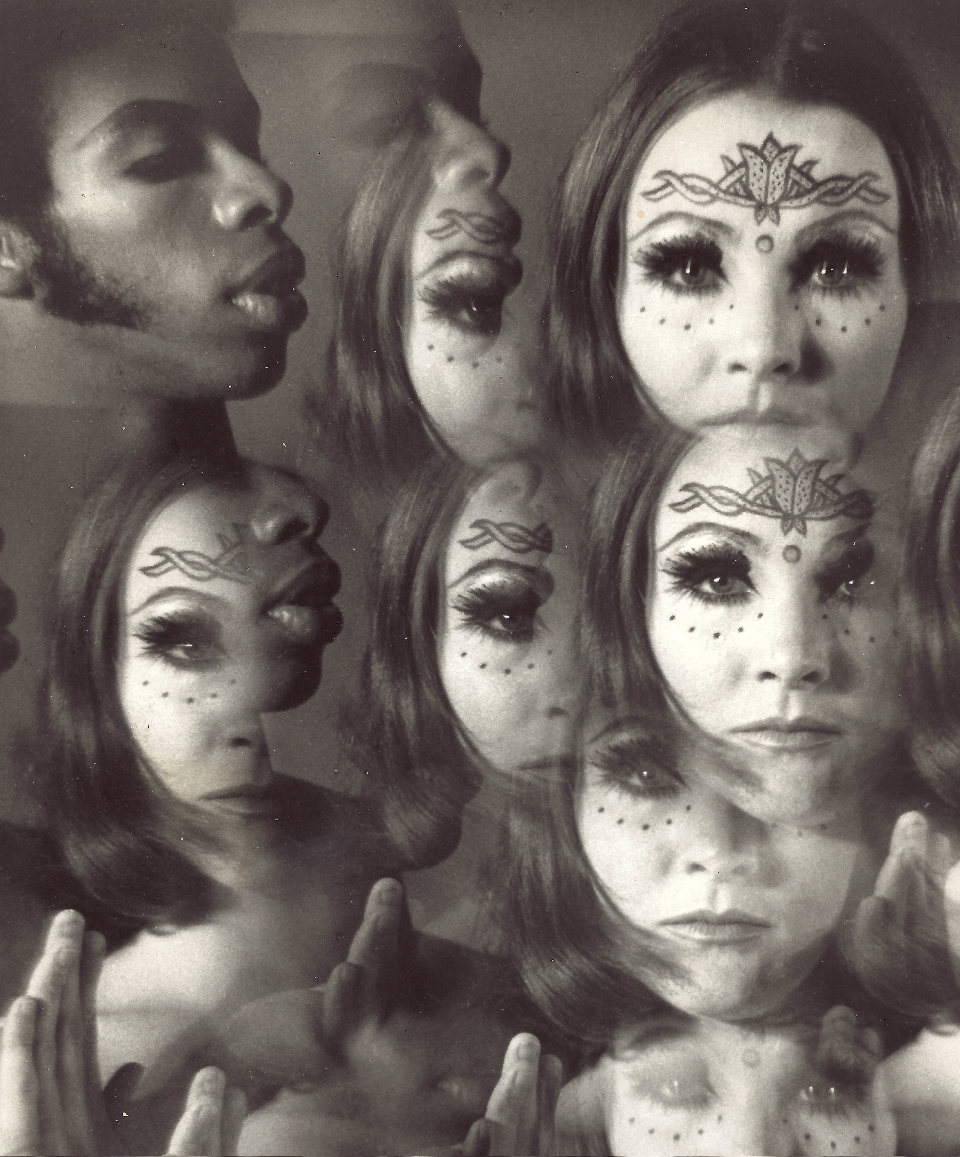
Sure, the film has its share of talking heads, including former dancers who share their often poignant and insightful thoughts, but it also has some cool archival footage, including that of Astarte (left). Choreographed by Joffrey in 1967, this psychedelic ballet featured a live rock band, a light show worthy of Grateful Deadheads, and films of company members go-going at a boho nightclub. (The Joffrey, then based in the Big Apple, was the renegade troupe to Balanchine’s New York City Ballet and American Ballet Theatre.) As for Astarte’s onstage dancers, they were garbed in nothing less than LSD-inspired unitards, looking like they were having, well, quite the trip.


In other words, it was out with the swans and in with the hip(pie), as a new balletic era had begun. Indeed, even Time Magazine hailed the troupe’s edgy status by anointing the Joffrey on its cover.

Other pop culturally-oriented works followed, including Twyla Tharp’s 1978 Deuce Coupe, set to music of The Beach Boys (which, the doc tells us, would help put Tharp on the terpsichorean map, including her eventually making some 14 ballets for ABT).

And when the Joffrey found itself in dire financial straits, it was the critically panned (for the most part), Billboards, a 1993 pastiche making use of Prince’s music that helped fill its coffers. (Included in the suite was Laura Dean‘s Sometimes It Snows in April, pictured at top.) It would be the move from New York to Chicago, though, two years later, that ultimately saved the Joffrey from sinking into tutu oblivion.

Another Joffrey hallmark is that its founder was committed to preserving historic ballet masterpieces, ones that had vanished from repertories of the world’s major ballet companies. Joffrey understood that homage needed to be paid to the classical choreographic pioneers of their time, by the pioneers of the present. To that end, the doc gives us glimpses of Kurt Jooss’s 1932 antiwar ballet, The Green Table (above), with the German visionary himself teaching the Joffrey dancers this groundbreaking work that was seen in the States for the first time in 1967.

In 1973, Joffrey would also oversee the reconstruction of the surreal cubist ballet, Parade (left), a gem from 1917 that had originally been choreographed by Ballet Russes dancemaker, Leonide Massine. (Also a fabulous performer, he was the Cobbler in The Red Shoes, from 1948, the definitive ballet movie, unlike 2010’s Black Swan; click here for our ruminations on those films). With costumes by Picasso, a libretto by Jean Cocteau, and the quirky music of Erik Satie – the wacky score was enhanced by typewriters and sirens – this piece would have been lost to the world had not Robert Joffrey reconstructed it, bringing in Massine himself to stage on his dancers. (Click here to read our Dance Teacher Magazine story on Kermit Love, who received Picasso’s seal of approval before recreating the artist’s wildly imaginative costumes.)

But with very little new under the sun, it seems a lot harder to be avant-garde in the 21st century (calling all cutting edge choreographers, puhleeze; meanwhile click here and here for our stories on Los Angeles Ballet‘s staying power and their commissioning commercial dancemakers, respectively, including several from So You Think You Can Dance; click here for our coverage on executive producer/SYTYCD judge, Nigel Lythgoe), we do have the Joffrey to thank for having sparked the pointe shoe riot. (For our Los Angeles Times article on the Joffrey’s 2003 Music Center appearance, which included Domingo Rubio performing the troupe’s reconstruction of Nijinsky’s Afternoon of a Faun, click here. [Rubio was also in the late great Robert Altman‘s fictional biopic of the Joffrey, The Company, which featured lots of dance beautifully shot.] And for our most recent take on the troupe, which performed its Nutcracker (above) at the Dorothy Chandler Pavilion last month – pretty, but not exactly earth-shattering – click here.)

Whew – sorry for the multitudinous asides! Though Hercules’ film is far afield from that other dance doc currently in theaters – Wim Wenders’ Pina 3D, an Oscar nominee for best documentary (click here for our musings) – it’s wonderful to have an historical record of this thoroughly American troupe. Now let’s see where contemporary ballet goes from here. Will the Twitterati/Facebook generation, used to receiving its info in byte-sized bits, delve into the past in order to help spark a refashioning of ballet for the future? We certainly hope so. In the interim, catch the Los Angeles premiere of Joffrey: Mavericks of American Dance on February 1 at Zipper Concert Hall at The Colburn School.

Posted in Uncategorized | Tagged , , , , , , , , , , , , , , , , , , , , , , | Comments Off on Joffrey Ballet: Born to Bourrée…

Go For Baroque

By Victoria Looseleaf

There could be better ways to spend a Sunday afternoon than going to a chamber music concert on the fifth floor of Los Angeles Music Center’s Dorothy Chandler Pavilion – but we can’t think of any! Seriously, after several unsuccessful attempts, we made it to Le Salon de Musiques, a monthly concert series now in its second season under the artistic directorship of Francois Chouchan and Phillip Levy.

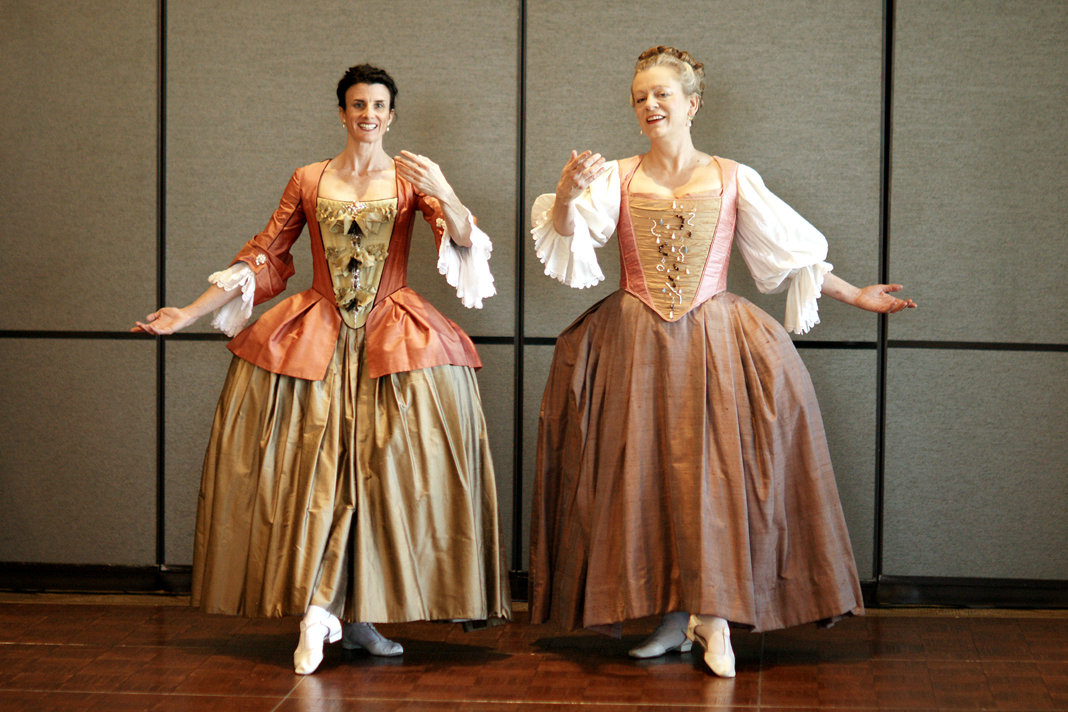
That the audience members are up-close-and-personal with the musicians is part of the appeal, along with the après concert fare: free-flowing champagne and hors d’oeuvres, the latter courtesy of Patina. Past concerts have included music of Brahms, Schubert, Mozart and the usual suspects, while the most recent offering, an all-Baroque program meant to recreate a salon in Versailles during the court of Louix XIV (left), also featured a pair of dancers.

Linda Tomko (below right) and Jill Chadroff, both scholars in the field as well as performers, donned hooped and corseted gowns and tiny-heeled dancing shoes to give an elegant glimpse into a nearly lost art form. (Since we teach Dance History at USC, we’re up to terpsichorean snuff on Le Roi de Danse (aka The Sun King), and how his peeps at court were required to take dance lessons. In fact, if there were any sort of missteps – from whence the term faux pas comes – banishment from court would most likely ensue!)  Photos above right and below by Henry Lim.

But we digress: With Patricia Mabee on harpsichord, Leif Woodward on viola de gamba and Susan Feldman on a period violin, the music was  enhanced by mezzo-soprano Monika Bruckner (we don’t know if she’s related to the composer), with the tunes finally beginning after musicologist Julius Reder Carlson, who, while well-schooled and well-meaning, went on too long with bloated talk about the Baroque era. (Hint: Most of us probably know that Baroque art was intended to evoke emotion and passion instead of the calm rationality that had been the hallmark of the Renaissance.) And instead of Reder Carlson blabbing about each piece (there were 10 on the bill), perhaps some short program notes would be in order. (Hello: We wrote the program notes for the Los Angeles Master Chorale for four seasons beginning in 2004, including introducing world premieres by Steve Reich, Christopher Rouse, and others…)

That said, we loved the opening number by Jean-Baptiste Lully, with Bruckner rendering a lovely aria from the opera Armide, after which the dancers displayed precise, fleet footwork to the opera’s lively Passacaille. And who knew that Marie Antoinette was a composer? Not many, but it’s possible she wrote C’est mon ami in between adorning herself (with help from ladies-in-waiting, of course) in elaborate frocks, piling her hair/wigs high and feasting on beaucoup de gâteau (cake, friends, lots of cake).

Other works included a Marin Marais solo, Chaconne, nimbly played by Woodward, his flying fingers making easy work of double and triple stops. (Admittedly, we’re partial to Marais’ The Bells of St. Genevieve…) Tomko also executed a solo to a Jean-Phillipe Rameau work, one she herself choreographed only this year. Mabee, too, took a solo turn with a Domenico Scarlatti sonata (a pity she didn’t dedicate it to Gustav Leonhardt, who recently died at age 83), followed by Bruckner warbling Domenico Cimarosa’s, E vero che in casa.

Completing the program: an aria from Gluck’s Orphée et Eurydice, and music and dance scenes from the ballet pantomime, Le Peintre Amoreux de son Modèle (The Painter in Love with his Model), choreographed by Auguste Ferrère. With the latter, we were treated to Chadroff in a pants role and Tomko the scolding adult who discovers her charge has been painting – gasp – his model (Bruckner), topless, at least in his own mind (and with magic marker on butcher paper).

A short, informative Q & A with the musicians followed (these can be so dreary, with sub-par questions often being posed), while an attentive waiter began pouring champagne for a thirsty audience. Although the acoustics are not the best on the fifth floor that now looks like a Marriott banquet hall, albeit one with great city views (we miss the room of days gone by, the one with a gorgeous bar, sumptuous banquettes and comfy sofas), it was the chairs – squeezed super-close together because of the dancers’ need for more floor space – that proved most painful, though nothing a little bubbly didn’t help.

A welcome addition to Los Angeles’ chamber music scene, Le Salon de Musiques is yet another way to experience fine music in our culturally rich city. (Click here for one of our many written rhapsodies on Gustavo Dudamel and the Los Angeles Philharmonic, with Mahler coverage coming anon, our having zipped over to Disney Hall for an extraordinary Mahler Second after the chamber music concert.) Indeed, we’re looking forward to February 26, when Le Salon presents music of Arnold Bax, Fauré and Poulenc. (Btw, we loved the Labèque Sisters playing Poulenc at the Bowl last September; click here to read about that, including our KUSC interview with the sibs.)

A wonderful divertissement, Le Salon de Musiques now helps make Sundays a little more cozy: Yes, we may have the return of Downton Abbey, which we’re seriously addicted to (click here for our take on that), but the season ends to Homeland and Boardwalk Empire had left somewhat of a hole for us  (click here and here for our takes on those fabulous shows), a gap Le Salon can now help fill. So, til next time, à bientôt, mes amies!

P.S. We’re thrilled about most of the Oscar nominations, so kudos to The Artist, which we predict will take the award for best picture (click here for our musings), and Wim Wenders’ Pina, Germany’s entry for best documentary (click here for those thoughts). Thumbs up, as well, to Terrence Malick for The Tree of Life and its three noms, including for best director (click here). We’re not pleased, however, with Michelle Williams’ nod for My Week With Marilyn (click here). And what on earth happened to a best actor nod for Michael Fassbender, our dude of the moment (click here to, er, bone up on him). But whaddya gonna do. We know what we’ll be doing: We’ll be weighing in again soon on all of this Oscar stuff – click here for our Oscar coverage from last year, folks – so stay tuned!

Posted in Uncategorized | Tagged , , , , , , , , , , , , , , , , | Comments Off on Go For Baroque

Modern Dance For Dummies…

By Victoria Looseleaf

…could be the subtitle of Casebolt and Smith’s dance/theater piece, O(h), now playing weekends through February 19 at the Actors Company Theatre in West Hollywood, a cool space to see dance. We were the first to write about Liz Casebolt and Joel Smith for the Los Angeles Times in 2008 (as part of a larger article), so click here to read that. Flash forward to: Their latest show, one intended to broaden the audience for contemporary dance, features the pair having no compunctions about tackling sacred cows, including Martha Graham (click here to read our LAT review of the Graham troupe’s visit last year, the 85th anniversary of the company).

And dance aficionados will surely enjoy references to the likes of Charles Weidman (right, from 1939, The Dance of Life; photo by Barbara Morgan), and Jiří Kylián. (Click here for our reportage on Netherlands Dance Theater, the Hague-based troupe that performed at the Pavilion last March. We also did a KUSC interview with Jim Vincent, who, alas, is no longer directing the company – and have covered many a Holland Dance Festival in Den Hague, so click here for our Dance Magazine coverage from 2009.)


But we digress: We recently reviewed Casebolt and Smith for Dance Magazine, so not wishing to be redundant, click here to read our take for yourselves. Also, in the spirit of supporting Los Angeles dance, we urge you to puhleeze get thee to the West Hollywood venue and see for yourselves this unique act, albeit one in search of a director. Enjoy and please let us know what you think. Merci, gracias, thanks and danke. (And for those seeking to further enhance the dance-going experience, check out Wim Wenders‘ new 3D documentary, Pina, Germany’s entry for best Oscar documentary, and click here for our coverage. After all, one can never have too much dance!)

Photos of Casebolt and Smith by Jeff Larson.

Posted in Uncategorized | Tagged , , , , , , , , , | Comments Off on Modern Dance For Dummies…

Pina the Powerful, Now in Sumptuous 3-D

By Victoria Looseleaf

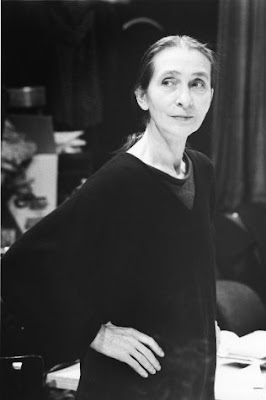
It was a huge loss to the global arts community when choreographer Pina Bausch died unexpectedly from cancer in 2009, at age 68, some five days after being diagnosed (and not even two weeks after Michal Jackson’s equally untimely death).

We were in Montpellier at the time (click here for our Los Angeles Times Dispatch From Montpellier; click here and here for our 2011 festival coverage, including our LAT reportage), and were naturally distraught. (Merce Cunningham would die in 2009 as well, shortly after the German-born choreographer, but at age 90.)

Pina, as she was affectionately known, had trained with Kurt Jooss, one of the fathers of German expressionistic dance, and graduated from Juilliard before founding the contemporary troupe, Danztheater Wuppertal Pina Bausch, in that industrial town in 1972. Famous for its striking theatricality, which included sado-masochism, intentionally bad ballet, lots of evening gowns, high heels, lipstick-adorned women and barefoot men in suits, Pina’s company was also known for its stellar dancers.

Direct, coy and infused with manic glee, many performers stayed with Pina for more than 25 years. Now, with Wim Wenders’ gorgeous documentary, Pina, Germany’s official entry at the 84th Oscars (it better win!), we have a peek into Pina’s world. Having become completely smitten with Bausch after seeing a 1985 performance by the company (her choreography had already garnered world-wide acclaim and would continue to win major prizes until her death), Wenders sought out the dancemaker.

The two immediately began making plans to collaborate, and were in talks for 20 years, until Wenders (below), after seeing the concert film U2 3D, finally found the format that would bring Bausch’s work to the screen in all its kinetic splendor. The year was 2009, but just two days before the first rehearsals were to begin, Bausch died. The work that was to be a documentary about Pina, then became a love letter for Pina. (And though Pina isn’t the first 3D dance film – last year Michael Flatley’s Lord of the Dance 3D underwhelmed the critics – click here for our L.A. Times review – it certainly has raised the bar.)

Wenders’ film is filled with stunning imagery. Excerpts are included from Bausch’s famed Rite of Spring (where dancers move, angst-ridden, through several tons of dirt that cover the stage, right and at top), and Nelken or Carnations, whose set is a stage strewn with thousands of the pink herbaceous perennial. (Click here for our review from the 2010 Lyon Danse Biennale, where we actually got to hang out with some of the company’s dancers. We also cherish our time spent with Pina, herself, in a 1996 interview.) But we digress: Bausch’s early masterpiece, 1978’s Café Müller, below, is also seen, both in past and present iterations.

An intimate work based on Bausch’s childhood memories of her parents’ establishment, Müller features a female dancer (originally Bausch), re-entering the café as a sleepwalker, eyes shut tight and arms outstretched. Set to the music of Henry Purcell, the work is filled with chairs being flung about in a place where people don’t connect easily (what would Facebook’s Mark Zuckerberg think?), their spasmodic, often brutal moves a social metaphor. Occasionally decried as ugly – and not dance, per se – the work was excerpted in Pedro Almodóvar’s 2002 film, Talk to Her, with Pina, one of the dancers, doing the terpsichorean honors.

Wenders, known for such films as Paris, Texas, Wings of Desire and Buena Vista Social Club, made wonderful use of Wuppertal and its environs, shooting scenes in and around its famous monorail, in traffic and on piles of waste that surround the city. There are also excerpts from Kontakthof (Meeting Hall), performed in three different versions: the Bausch ensemble; older dancers raging from 65 to 80; and teens, aged 14 to 18. (For a look at Pina working with teens on her work Contact, we recommend Dancing Dreams, a fine documentary directed by Anne Linsel and Rainer Hoffman; click here for our take on that.)

Bausch was also known for huge sets, one featuring water, Vollmond (Full Moon), which takes place in an onstage river of water – tons of it (right), while her 2004 work, Ten Chi, with Peter Pabst’s trisected whale dominating the stage, was a memorable opus we reviewed for Dance Magazine in 2007 at UCLA’s Royce Hall (click here). And though we were jet-lagged, having just come from Den Hague and the Holland Dance Festival (click here for our coverage of that), we were mesmerized by the three-hour opus, not least of which was due to the insanely fierce dedication of the dancers.

Speaking of dancers, members of Pina’s troupe are also interviewed in the film, lauding her in adoring terms. One recalls: “When I began, I was pretty shy; I still am. And after many months of rehearsing, she called me and said, ‘You just have to get crazier.’ And that was the only comment in almost 20 years.”

It was Bausch herself who had insisted the film not have a conventional narration, which might make it seem excessively foreign to those who aren’t dance aficionados. But this is decidedly not the case: As dance is a form of non-verbal communication – stories without words – it’s fitting that this tribute to Pina, who impacted contemporary dance in profound ways, does most of its talking through bodies, those very bodies she explored, excavated and arranged so exquisitely, even as they were nude, vulnerable and subject to torment, psychological and otherwise.

Finally, much as we absolutely loved the film, we also came away slightly haunted – and sad – at the thought that Pina left us too soon. True, her work remains – or does it? We wonder, after all, how the company will continue without this unique voice at its helm – and with its dancers, for the most part, not getting any younger. Knowing there will never be another Pina Bausch hurts, but we’re grateful for the time we had with her – and for this remarkable film by Wim Wenders.


Posted in Uncategorized | Tagged , , , , , , , , , , , , , | Comments Off on Pina the Powerful, Now in Sumptuous 3-D

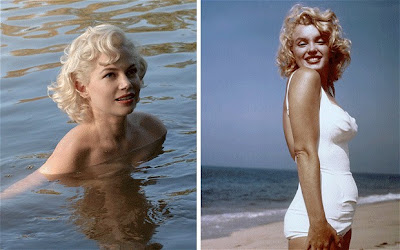
My Week With (Faux) Marilyn

By Victoria Looseleaf

We love Michelle Williams, but she can’t hold a candle to Marilyn Monroe in the waifish, sex bomb, whispered-voice arena. Indeed, it’s almost painful to watch Williams, all padded hips, corseted waist and neo-torpedoed breasts, trying to emulate the tragic blonde icon in Simon Curtis’ trifle of a film, My Week With Marilyn.

Largely based on an equally slight 2000 book by British documentary filmmaker, Colin Clark, whose most notable claim to fame was working with Monroe and crew on the 1956 Sir Laurence Olivier-directed film, The Prince and the Showgirl, this flick is yet another look at the bi-polar goddess of cinema, albeit an unfortunate look.

And as Julian Barnes writes in his wispy Booker Prize winning tome, The Sense of an Ending (click here for our coverage), “memory equals events plus time,” Clark’s story may also have mutated since his stint with Sir Larry, etal, lo those many decades ago. Clark, a son of privilege (his father was the eminent art historian Kenneth Clark), is played toothily by the otherwise formidable Eddie Redmayne, and got the gig because his parents were friends with the director and his wife, Vivien Leigh, abysmally portrayed here by Julia Ormond, who seems to be one of those actors who keeps failing upwards.

In any case, how could so much go so wrong, besides the major miscasting of Williams? We’ll get to that, but first, there were actually several decent moments: Curtis, who is married to Elizabeth McGovern (Lady Grantham on PBS’s delicious Downton Abbey; click here for our take on that fabulous series), has a good Olivier in Kenneth Branagh (and if he were taller it would really work), whose disdain for the perpetually late-to-the-set sexpot erupts with more frequency than Mt. Etna.

(We gotta say, though, that we love Sir Larry, and his directorial temper shenanigans don’t surprise, cuz they come with the genius territory. To wit: his Heathcliff in Wuthering Heights; any of his Shakespeare roles; and we could go on…).


Another great English actor in this flick: Dame Judi Dench shines in the small role of Sybil Thorndike, who gently coaxes poor Marilyn through a number of not very difficult line-readings.

But as scripted by Adrian Hodges, the film is a roller coaster of clichés that we’ve heard and seen before: Although Monroe had only recently married her third husband, playwright Arthur Miller (Dougray Scott), he ups and leaves London in a fit of disgust. (Cue pill-taking and Clark’s shoulder for Marilyn to cry on, boo hoo.) Zoë Wanamaker, on the other hand, manages a darkly comic turn as Monroe’s acting coach, Paula Strasberg, who continually promises Olivier that the great actress that is Marilyn Monroe will save the day. Nothing really does save the day – or The Week, for that matter.

And it’s even worse when Williams is asked to recreate a host of overly familiar Monroe poses: nude, windswept, half-drunk. The nadir, though, is when Williams tries to sing à la Monroe, but in her own voice. Add to that Williams’ complexion (not naturally creamy), bone structure (her schnoz seems a bit off-kilter), and weirdly styled hair that often resembles a tightly-coiled wig in bedhead mode, and there is a veritable drag-show quality to this portrayal. Where is Lypsinka when you need her! More importantly, what would Heath Ledger have thought? (We love Heath and still miss him dearly…)

Seriously, Oscars, puhleeze don’t even think about giving Michelle Williams a nod for this. Better yet, why wasn’t the film left to the dust bin of memoirs, or at least cast with someone like, well, Carey Mulligan. This just in: Okay, peeps, Michelle Williams won the Golden Globe for Best Performance By an Actress in a Motion Picture – Comedy or Musical. Yeah, we thought your performance as Marilyn Monroe was absolutely hilarious. The movie was a hoot. Right up there with Charlie Chaplin, Buster Keaton, Jerry Lewis and Woody Allen. We’re still laughing, can’t you tell. Harumph to the HFPA!

The real life Prince and his Showgirl: Sir Laurence Olivier and Marilyn Monroe

Posted in Uncategorized | Tagged , , , , , , , , , , , , , , | Comments Off on My Week With (Faux) Marilyn

Downton Abbey: Our TV Drug of Choice

By Victoria Looseleaf

Okay, so we arrived a tad late to the party, the feast that is Downton Abbey, the series that won six Emmys last year and will probably clean up at the Globes this weekend. But we’re in full-throttle mode now. Devouring most of Season 1 over Christmas weekend and catching the final episode after we came back from San Francisco in early January, we’re now spreading the gospel. (We recently hooked Mr. Looseleaf on the series, which is tres cool, cuz we can now iChat about all of the brouhaha erupting at the fictional estate of Downton Abbey.)

For those not in the loop, DA is a public television series chronicling the aristocratic Crawleys, set during the late Edwardian era, beginning with the news of the Titanic’s sinking. Originally created and written as a mini-series (four eps of 90 minutes each), by the fabulous Julian Fellowes (left, he won a Best Screenplay Oscar for the late Robert Altman-directed 2001 film, Gosford Park), DA is a guilty pleasure…and then some.

Featuring a stellar ensemble cast (hello, Maggie Smith, dowager divine, who delivers her zingers with such style we can’t help but laugh out loud), deliriously gorgeous costumes and scenery, and clever plot lines, DA is a frothy, intriguing foray into a fantasy kind of life, i.e., Twitterless, that now seems eons ago.

In a nutshell: The series revolves around Lord and Lady Grantham (Hugh Bonneville and Elizabeth McGovern as Cora, his American-born heiress wife, respectively); the Lord’s redoubtable mother, the Dowager Countess (Smith); and three eligible daughters, none of whom, however, are able to inherit the estate due to an antiquated British law known as an ‘entail.’ Enter then third cousin Matthew Crawley (Dan Stevens), a middle-class barrister, and his mother Isobel (Penelope Wilton), ready to ascend to the manor, er, unborn.

The high jinx of this high-bred family are paralleled by a hierarchy of servants with their own machinations, including affairs, ambitions and what-have-yous. And while the Crawleys, in that veddy, veddy British fashion, keep their feelings from one another, they have no compunctions about unburdening themselves to their trusted maids and valets. (Who needs a therapist, hah!)

The class system is, of course, on unbridled view, with the help, generally loyal to the family to a fault, remaining unshakeable with regards to any standard-loosening. The view is also one of hard-core Romanticism, especially that evoked by the Crawleys’ first-born, Lady Mary (Michelle Dockery), a morass of feelings, rebelliousness and darkness, her delicate beauty scorching the small screen, even when she rides with the hounds (left).


So: Will she or will she not marry cousin Matthew, solving the inheritance issue? Or will she have – gasp – a one-night stand with the handsome Turk, Kemal Pamuk (Theo James, right, with mud on his face, which should be the worst that fate doles out to him), an event that will come back to haunt the family in Season 2. (That season, which began last Sunday, opens in 1916, with the two-hour episode drenched in the blood and horrors of World War I.)

And what would romantic intrigue be without any homosexual under(over) tones. Cue evil footman Thomas (Rob James-Collier), while the downstairs love factor also becomes heated: Lord G’s valet, the lame Bates (Brendan Coyle), and Lady’s maid Anna (Joanne Froggatt, below), exchange words of love and darting looks, although the deed remains unconsummated, with Season 2 bringing melodramatic surprises for this pair.

Who knew, as well, that middle daughter, spinster Lady Edith (Laura Carmichael), could be as conniving as Iago, while the youngest, Lady Sybil (Jessica Brown-Findlay, below left), a feminist, is the first to embrace a changing England (and her chauffeur), because others seem to be in denial or, worse yet, not even notice the future hurtling towards them.

Ultimately, though, we must ask ourselves why we care about British aristocracy. For one reason, we at The Report are mad about Englishmen, lordly or not (click here for our Ricky Gervais coverage; here for Ben Whishaw; here for Keith Richards; here for Julian Barnes; and coming soon, Gary Oldman and Colin Firth). For another, the American idea of aristocracy, say, the Kennedys, has seemed to morph into an obsession with, ugh, celebrities, and face it: Beyoncé, J. Lo, etal, cannot hold a candle to the DA characters whose aura of magical mystery, both haute and low, will forever have a hold on us, no matter how far removed from finely polished flatware we find ourselves.

Finally, Downton Abbey, a dream of a series, makes for great water cooler conversation (not that we go into an office, our water cooler being a Brita filter), and since Boardwalk Empire and Homeland have both finished their respective seasons (click here for our coverage of BE and here for the Claire Danes/Damian Lewis show), and it’s been years since The Sopranos was on HBO, Sunday nights are once again providing our favorite escape. Something akin to Godiva chocolates, truffles and foie gras – though the California ban against the forced-fed goose liver delicacy will soon take effect – Downton Abbey, class with sass, has thrust us once again into a golden age of television.

THIS JUST IN: Riding the Downton Abbey bullet train, the beloved actor/hoofer/New Age goddess, Ms. Shirley MacLaine, will be joining the lords and ladies of the realm next season. (Click here for info on Shirley being honored with the AFI Lifetime Achievement award this June.) DA has cast the Oscar-winning thespian to play Martha Levinson, the American mother of Lady Grantham. And even our favorite news dude, Brian Williams, was excited about this casting coup, which should make for plenty of fireworks between MacLaine and the Dowager Countess. The third season begins shooting next month and is expected to have its premiere in Britain in September, meaning we Yankees won’t get it until January 2013. Our only question: Will Shirley be asked to cut a rug, or at least strut her still spunky stuff in some cool fashion? We hope so, as evidenced in this clip, choreographed by the inimitable Alan Johnson. (Thanks Dance Magazine EIC, Wendy Perron, for finding the clip!)

Posted in Uncategorized | Tagged , , , , , , , , , , , , , , , | Comments Off on Downton Abbey: Our TV Drug of Choice